
The short answer
You likely need a new chimney liner if your flue is cracked, deteriorating, unlined, or now vents a different appliance, such as a boiler converted from oil to gas. ProSweep inspects the flue, recommends a liner matched to your fuel and appliance, installs it from the roof down, and keeps your home clean throughout the job.
A chimney liner is the protective channel inside your flue. It carries smoke and exhaust gases up and out, and it shields the surrounding brick and nearby wood framing from heat and corrosive byproducts. Many older Brooklyn homes have clay tile liners that have cracked, shifted, or worn away. Some were built with no liner at all. Others now serve a different appliance than the one they were designed for. When a liner fails, heat and gases can reach parts of the house they were never meant to touch. ProSweep Chimney Service installs new liners sized to your appliance and flue. Our certified technicians handle homes in Brooklyn and nearby areas, and they explain what they find before any work begins.
Signs you need it
Liner problems are usually hidden inside the chimney, but they tend to show up as symptoms you can notice in the house or on the brick. If you see any of the following, schedule an inspection before your next heating season.
- A smoky or sour creosote smell in the room, especially on humid days or when the fireplace or boiler is not running
- Poor draft: smoke rolling into the room, fires that are hard to start, or a heating appliance that struggles to vent
- Flakes of clay tile, mortar, or brick collecting in the firebox or at the base of the flue
- White, chalky staining on the outside or inside of the chimney, a sign that moisture is moving through the masonry
- Water dripping or pooling in the firebox or around the appliance connection
- A recent or planned switch from oil to gas, or a new boiler, furnace, or water heater venting into an old flue
What's included
Every liner job starts with a clear picture of the flue's condition and ends with a working, documented system. Here is what our crew covers on a standard installation.
- Camera inspection of the existing flue to check for cracks, gaps, blockages, and deterioration
- Measuring the flue and matching liner size and type to your appliance and fuel
- Cleaning the flue with rotary brushes to remove creosote, soot, and loose debris before the liner goes in
- Removing broken tile or obstructions where needed so the new liner can pass through
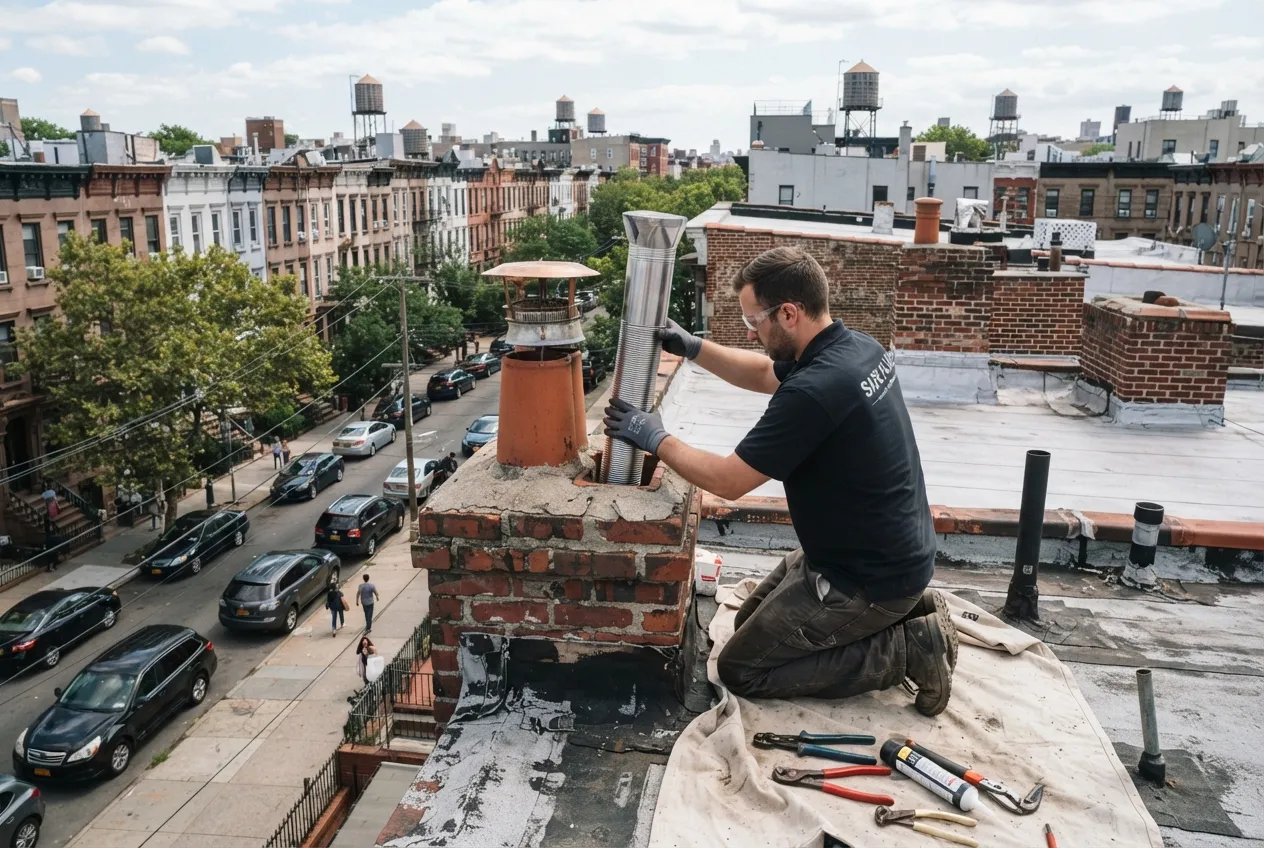
- Installing the liner, typically stainless steel, from the top of the chimney down to the appliance or smoke chamber
- Connecting the liner at the bottom and securing it with a top plate at the crown
- Installing a chimney cap to keep out rain, debris, and animals
- A final check of draft and connections, plus photos so you can see the finished work
How we work in your home and on the roof
Liner installation involves work inside and outside, and we treat both areas with care. Inside, the crew lays drop cloths from the door to the fireplace or boiler room and covers nearby floors and furniture. HEPA vacuums run while we clean the flue and open the appliance connection, so soot and fine dust stay contained. Rotary brushes clean the flue walls, and a camera lets us show you what the inside of the chimney looks like before and after.
On the roof, we set up safe access and protect the roofing around the chimney. The liner is fed down from the top, which is why roof access matters so much on rowhouses and taller buildings. Once it is in place, we seal the top, fit the cap, and check the crown and flashing for problems you should know about. We clean up before we leave and walk you through what was done.
The standard we follow
Our work follows the NFPA 211 standard, which calls for chimneys, fireplaces, and vents to be inspected once a year. Chimney professionals use three inspection levels. Level 1 applies when nothing about the system has changed. Level 2 applies when the system changes, such as a new appliance or a switch of fuel, or when the home is sold. Level 3 applies when a hidden hazard has to be reached by opening part of the chimney or building. Because a new liner usually means a change to the venting system, liner work generally calls for at least a Level 2 inspection, which includes a camera look inside the flue.
Fuel conversions are a common reason for a new liner in New York City. When a building converts its boiler from oil to gas, the chimney has to be evaluated as part of the work, and a new liner is often needed. Gas exhaust produces acidic condensate that can corrode a masonry flue over time. If you are planning a conversion, it helps to bring us in early, ideally before the city's heat season starts on October 1.
What affects the price
No two chimneys are the same, so we give you a quote after we have seen the flue. These are the main factors that shape the cost of a liner installation.
- Chimney height and how easy or hard it is to reach and work safely on the roof
- Fuel type and appliance: wood, gas, and oil each call for different liner materials and sizes
- Flue size, shape, and condition, including whether old tile must be broken out first
- How much creosote or soot buildup has to be removed before installation
- Whether a camera inspection, crown or flashing repair, or other masonry work is needed
How a visit works
First, we schedule a time that fits your week and ask a few questions about your fireplace or heating appliance, your fuel, and any symptoms you have noticed. On the first visit, a technician inspects the chimney, runs a camera through the flue, and shows you the footage. You get a plain explanation of what we found and a written recommendation and quote.
If you decide to go ahead, we book the installation. On install day, the crew protects your home, cleans the flue, installs and connects the liner, caps the chimney, and tests the draft. Most single-flue jobs are finished in one visit, though repairs or difficult access can add time. Before we leave, we review the work with you, share photos, and explain how often to have the system inspected going forward.
Chimney Liner Installation by city
- Chimney Liner Installation in Carroll Gardens
- Chimney Liner Installation in Cobble Hill
- Chimney Liner Installation in Gowanus
- Chimney Liner Installation in Red Hook
- Chimney Liner Installation in Park Slope
- Chimney Liner Installation in Windsor Terrace
- Chimney Liner Installation in South Slope
- Chimney Liner Installation in Prospect Heights
- Chimney Liner Installation in Brooklyn Heights
- Chimney Liner Installation in Downtown Brooklyn
- Chimney Liner Installation in DUMBO
- Chimney Liner Installation in Boerum Hill