
The short answer
Dryer vent cleaning removes the lint that builds up inside the duct between your dryer and the outside of your home. Because failure to clean is the leading factor in home clothes dryer fires, a clogged vent is a safety problem, not only an efficiency one. ProSweep cleans the entire run, clears the exterior or roof termination, and checks airflow before we leave.
Every load of laundry pushes hot, damp air and fine lint through your dryer vent. The lint screen catches a lot of it, but not all. What gets past the screen settles inside the duct, especially at turns, low spots and the outside hood. In Brooklyn brownstones, row houses and multi-family homes, dryer vents often run a long way through walls, ceilings and closets before they reach a rear wall or the roof. That means more places for lint to pile up and fewer places you can see. ProSweep Chimney Service cleans the full vent run, from the back of your dryer to the point where the air leaves the building. We check that air moves freely when we're done and show you what came out. Our certified technicians work cleanly, explain what they find in plain terms, and won't push repairs you don't need.
Signs you need it
Most owners call us because something about the dryer has changed. A vent rarely clogs all at once. Lint builds up slowly, so the signs can be easy to dismiss until several show up together. If you notice any of these, it's worth having the vent looked at.
- Clothes take two or more cycles to dry, or come out damp and hot
- A burning or scorched smell when the dryer runs
- The dryer cabinet, the laundry room or the clothes feel unusually hot
- Lint collecting around the dryer, on the floor behind it, or at the outside vent hood
- The outside flap barely opens, or doesn't open at all, while the dryer is on
- Scratching, chirping or rustling noises in the wall or near the vent, a sign of birds or rodents nesting
- Dust or lint blowing out of the vent connection into the room
- Condensation or moisture inside the duct or around the dryer
What's included in a dryer vent cleaning
Every visit follows the same checklist, so you know exactly what was done. If something can't be reached or needs repair, we tell you before we go further.
- Carefully pull the dryer out and disconnect it from the vent
- Inspect the transition duct behind the dryer and note any crushed, torn or plastic duct
- Clean the full vent run with rotary brushes sized to the duct
- Collect loose lint with HEPA vacuums as we work
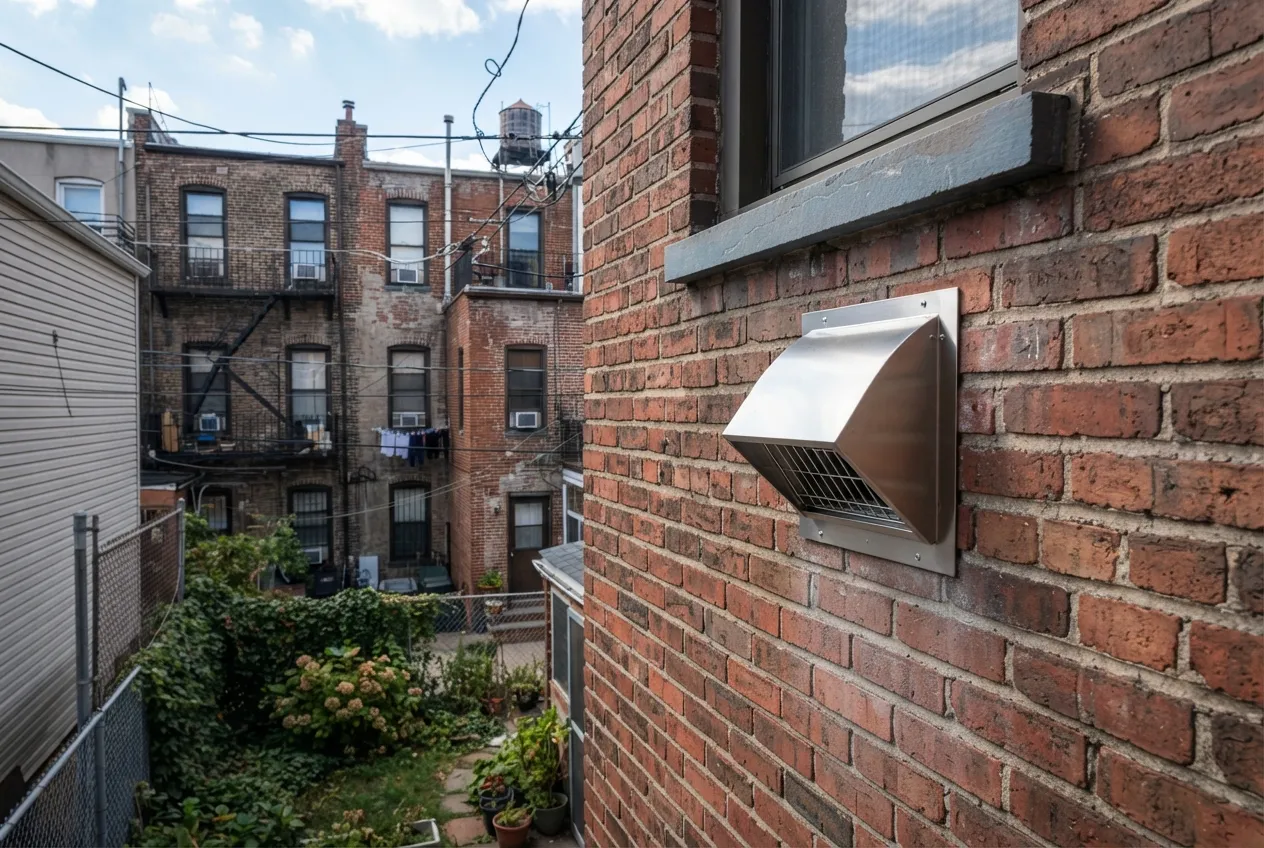
- Clean and clear the exterior wall hood or roof termination, including the damper flap
- Remove nests or debris at the termination when present
- Clear lint from the dryer's lint screen housing where we can reach it
- Reconnect the dryer and push it back into place
- Run the dryer and check airflow at the outside termination
- Walk you through what we found, with photos when helpful
How our crew works inside your home and on the roof
Inside, we lay drop cloths from the door to the laundry area before moving anything. The dryer is pulled out slowly so floors and walls aren't scraped, and we keep the connection end of the duct under a HEPA vacuum while brushing so lint doesn't drift into your home. Rotary brushes on flexible rods are fed through the run in sections. They loosen packed lint at turns and joints that a shop vacuum can't touch.
On long or hidden runs, which are common in older Brooklyn buildings, we use a camera to look inside the duct. That lets us find blockages, disconnected joints or crushed sections without opening walls, and lets you see the problem for yourself.
When the vent ends on the roof, a technician goes up to clean the termination and pull lint out from the top. Roof caps often have screens or tight dampers that trap lint and invite nesting. We clear them and let you know if a cap is the wrong type for a dryer. For rear-wall exits, we clean the hood from outside, using a ladder if needed.
Why a clean vent matters
According to the U.S. Fire Administration, failure to clean is the leading factor contributing to clothes dryer fires in homes. Lint is light, dry and burns easily. When it packs a duct, hot air can't escape, the dryer runs hotter and longer, and that heat sits right next to the material most likely to catch.
A blocked vent also makes the dryer work harder for every load. Clearing it doesn't fix a worn-out machine, but when buildup is the cause, owners often notice clothes drying in fewer cycles.
What affects the price
We give you a clear quote before work starts. The cost depends on the specific vent, not a one-size-fits-all rate. These are the main factors:
- Building height and roof access, including whether the termination is on a roof, a rear wall, or a hard-to-reach spot
- Length of the vent run and how many turns it has
- Gas or electric dryer, since gas units take more care to move and reconnect
- Duct size, material and condition, including crushed or plastic sections
- How much lint, debris or nesting material has built up
- Whether a camera inspection is needed to trace a hidden run
- Any repairs, such as replacing a transition duct or a damaged exterior hood
How a visit works
Most dryer vent visits are straightforward. Here's what to expect from start to finish.
- You tell us where the dryer is and, if you know, where the vent leaves the building
- We schedule a time window and arrive with protective coverings and equipment
- The technician looks at the setup and confirms the scope and quote with you before starting
- We clean the vent, clear the termination and test airflow
- You get a walkthrough of what we found and any recommended next steps, with no pressure to book repairs