
The short answer
Fireplace and damper repair fixes the parts of the system you see and use: the firebox walls and mortar joints, the smoke chamber above them, and the damper that opens and closes the flue. If your fireplace smokes, drafts when it's not in use, or sheds brick and mortar, a certified technician should inspect it and repair the damaged parts before you light another fire.
A fireplace that smokes into the room, a damper that won't close, or firebrick that crumbles when you sweep out the ashes are common problems in Brooklyn homes, especially in older brownstones and rowhouses where the masonry has seen many heating seasons. ProSweep Chimney Service repairs fireboxes, smoke chambers and dampers for homeowners in Brooklyn and nearby areas. Our certified technicians find the cause, explain what they see in plain terms, and fix it with as little disruption to your home as possible. This page covers the signs to watch for, what a repair visit includes, how our crew works, and what affects the cost.
Signs you need it
Most fireplace and damper problems start small and show up as things you notice in the room. Any one of these is a good reason to have the fireplace looked at before the next fire.
- Smoke drifting into the room, or a smoky or creosote smell, especially on humid days or when the heat is running
- Poor draft: the fire is hard to start, burns weakly, or smoke rolls out of the opening
- Debris, brick flakes or loose mortar in the firebox
- Gaps or cracks in the firebox walls or between the firebrick
- White, chalky staining on the brick, a sign that moisture is moving through the masonry
- Water in the firebox or a damp, musty smell after rain
- A damper that sticks, won't fully open or close, or has a broken handle or chain
- Cold air pouring down the chimney when the fireplace isn't in use
- Scratching, chirping or other animal noises in the chimney
What's included
Every repair visit starts with an inspection so we fix the actual problem and not just the symptom. We'll tell you what we found and what we recommend before any repair work begins. Depending on what we find, the work can include:
- Inspection of the firebox, damper, smoke chamber and visible flue
- Cleaning out creosote and debris where needed so the masonry can be properly assessed and repaired
- Repointing open or eroded mortar joints in the firebox with mortar rated for fireplace heat
- Replacing cracked, spalled or missing firebrick
- Repairing or replacing a throat damper, including the frame, plate, handle or linkage
- Installing a top-sealing damper at the top of the flue when the original damper can't be repaired
- Parging the smoke chamber to smooth rough or stepped brickwork that slows draft and collects creosote
- Checking or installing a chimney cap to keep out rain, debris and animals
- A clear explanation of the work done, with photos where they help
How our crew works in your home and on the roof
Fireplace work is messy by nature, so we plan for it. Before touching the fireplace, the crew lays drop cloths from the door to the hearth and seals off the fireplace opening. HEPA vacuums run during cleaning and cutting so soot and masonry dust stay contained instead of settling on your floors and furniture. Rotary brushes clear buildup from the flue and smoke chamber, and when we need to see areas you can't see from the hearth, we run a camera up the flue and show you what it finds.
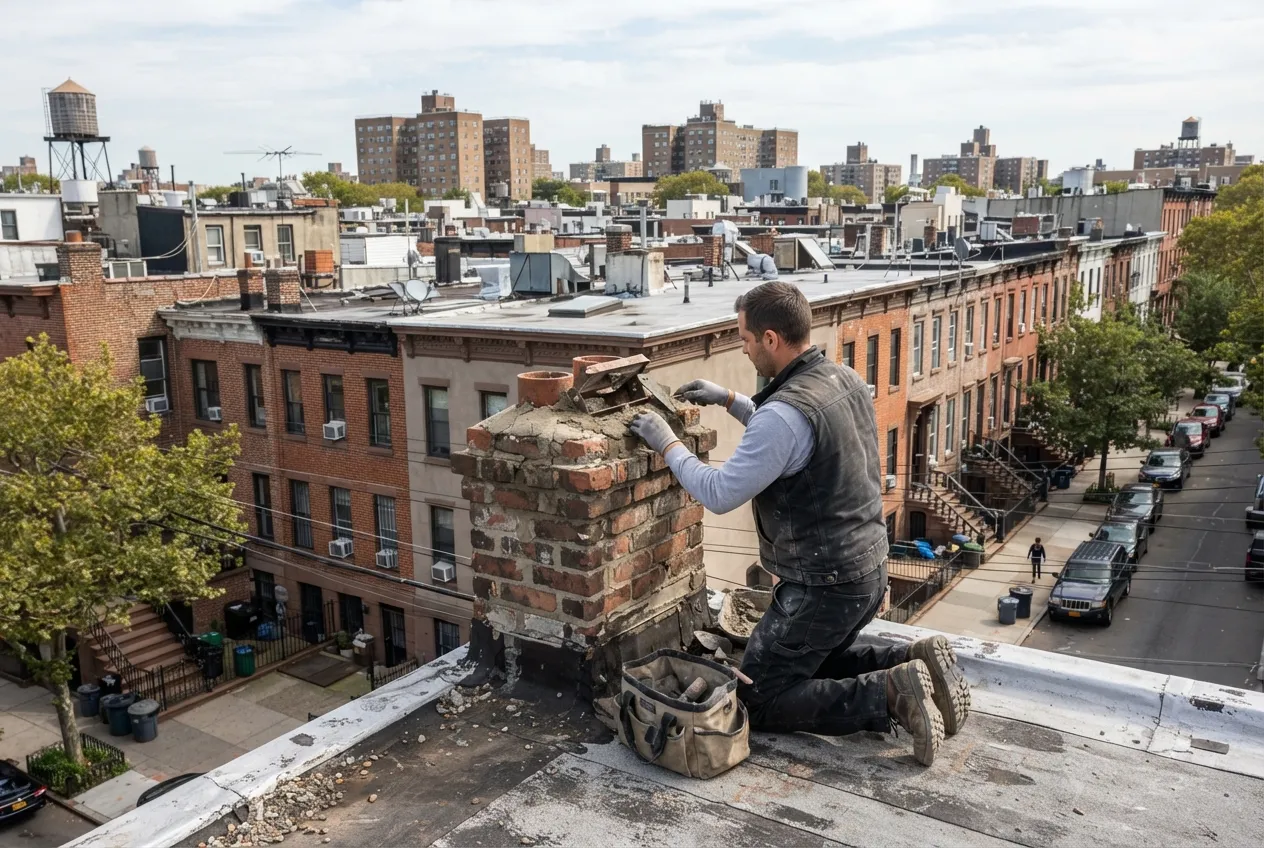
On the roof, we check the chimney crown, cap and the top of the flue, which is also where a top-sealing damper is installed. Brooklyn roofs vary a lot, from flat rowhouse roofs reached by a hatch to steep pitched roofs, so we confirm access ahead of time and use the right ladders and safety gear for your building. When we leave, the work area is vacuumed and the drop cloths come up clean.
The standard we follow
Our inspections and repairs follow NFPA 211, the national standard for chimneys, fireplaces and vents. It calls for these systems to be inspected once a year, and it describes three inspection levels used by chimney professionals. A Level 1 inspection fits when nothing about the system has changed. A Level 2 inspection is called for when the system changes, such as adding a new appliance or switching fuel, or when the home is sold. A Level 3 inspection is used when a hidden hazard can only be reached by opening part of the chimney or the building.
Most fireplace and damper repairs begin with a Level 1 or Level 2 inspection. We only recommend opening walls or masonry when there is a specific reason, and we explain that reason before any such work.
What affects the price
Every fireplace is different, so we quote after we've seen it. The main factors are:
- Chimney height and how easy the roof is to reach
- Fuel type: wood-burning, gas logs or a converted fireplace
- Flue size and the condition of the masonry
- How much creosote or debris has to be removed first
- Whether a camera inspection is needed
- The type of repair: repointing a few joints is a smaller job than rebuilding a firebox, and a top-sealing damper is a different job from repairing a throat damper
How a visit works
When you schedule, we'll ask a few questions about your fireplace, what you've noticed, and how the crew gets to the roof. Please don't use the fireplace for at least a day before the visit so the firebox is cool.
On the day of the visit, the technician protects the area, inspects the system and walks you through the findings. If the repair is simple, such as freeing a stuck damper or replacing a handle, it can often be done in the same visit. Larger jobs, like firebrick replacement or smoke chamber parging, are scheduled separately so the right materials are on hand. Before anything moves forward, you'll get a written description of the recommended work. When the job is done, we'll explain when the fireplace is ready to use again and what to watch for going forward.