The short answer
Chimney repair fixes the parts that keep water, heat and exhaust where they belong: the crown, cap, flashing, mortar joints, bricks, damper and flue liner. ProSweep's certified technicians inspect the chimney to find the cause, then make targeted repairs. We work to the NFPA 211 standard and protect your home inside while we work.
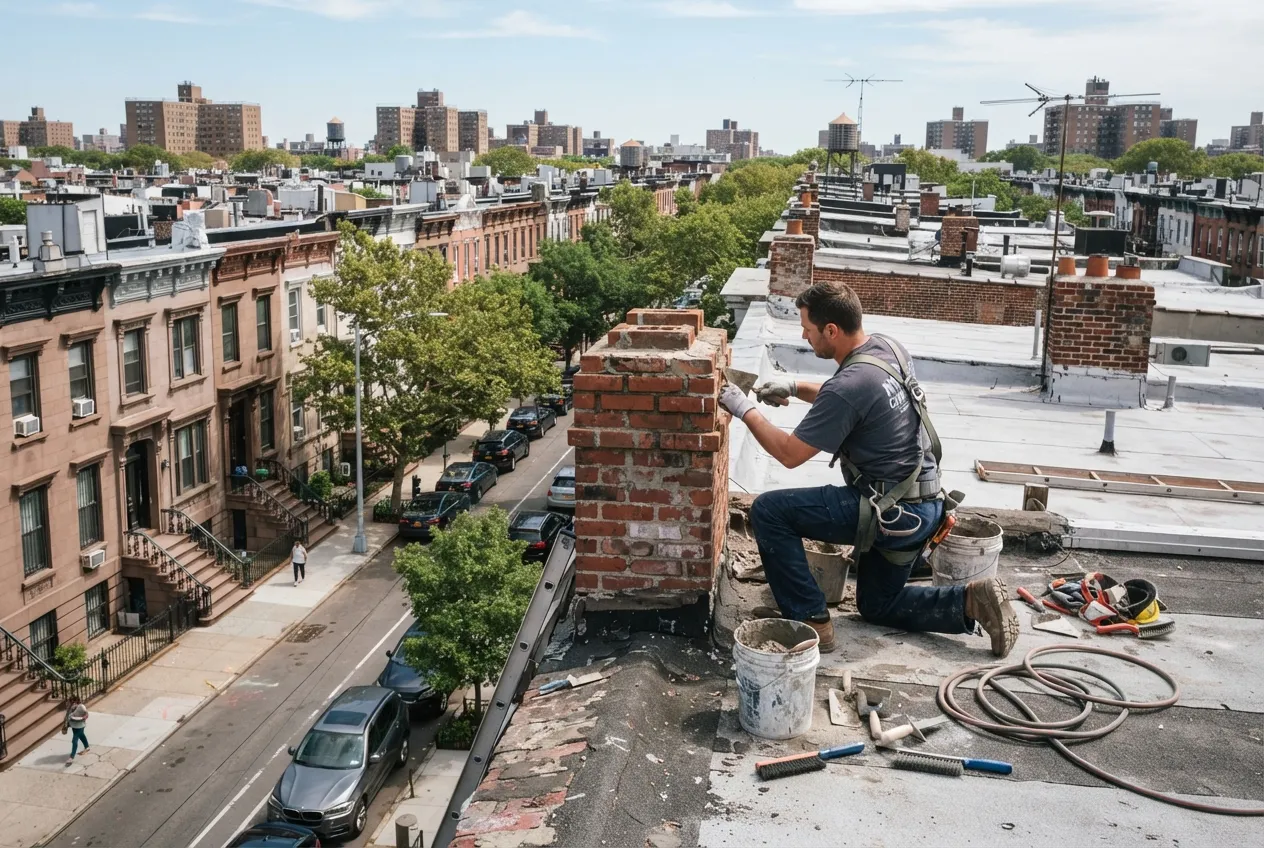
A chimney wears down from the outside as much as from the inside. Freeze-thaw cycles, driving rain and years of hot, acidic exhaust slowly break down mortar, crack crowns, loosen flashing and wear out flue liners. Many Brooklyn brownstones, row houses and frame homes have chimneys that are decades old and sit tight against a neighbor's wall, so a small leak or a cracked flue can cause more trouble than it seems to. ProSweep Chimney Service repairs masonry chimneys and flues for homeowners in Brooklyn and nearby areas. Our certified technicians find the cause of the problem, show you what they found with photos, and recommend the repairs the chimney actually needs.
Signs you need it
Most chimney damage starts small and out of sight. These are the signs homeowners usually notice first. If you see any of them, have the chimney looked at before you use it again, especially if the problems show up together.
- Water in the firebox, rust on the damper, or damp, stained walls and ceilings near the chimney
- White, powdery staining on the brick, which means water is moving through the masonry
- Brick flakes, crumbling mortar or pieces of tile liner falling into the firebox
- Poor draft or smoke rolling back into the room, which can point to a blocked or damaged flue
- A strong smoke or creosote smell, especially in humid weather
- Missing, loose or rusted chimney cap, or bird and animal noises inside the flue
- Cracked crown or gaps where the chimney meets the roof
What's included
Every repair visit starts with an inspection, so the work fixes the cause and not only the symptom. You'll get a written list of findings and the recommended repairs before any work begins. Depending on what we find, a repair can include any of the items below.
- Visual inspection of the firebox, smoke chamber, flue and exterior masonry, with photos of problem areas
- Camera inspection of the flue liner when cracks, gaps or missing tiles are suspected
- Repointing: removing failing mortar joints and replacing them with new mortar
- Replacing cracked or spalled bricks
- Repairing or rebuilding a cracked chimney crown
- Installing or replacing a chimney cap to keep out rain, debris and animals
- Resealing or replacing flashing where the chimney meets the roof
- Applying a breathable water repellent to exterior brick when it fits the situation
- Firebox mortar joint repair with heat-resistant mortar
- Damper repair or replacement, including top-sealing dampers
- Flue liner repair or relining, including liners for oil-to-gas conversions
- Cleanup of the work area and a review of the finished repair with you
How we work in your home and on the roof
Inside, the crew lays drop cloths from the door to the fireplace and covers the hearth and nearby furniture. We seal the fireplace opening and run HEPA vacuums while we work, so soot and mortar dust stay out of the room. If the flue needs cleaning before it can be inspected or repaired, we use rotary brushes sized to the flue. A camera run down the flue lets us see liner cracks and gaps that can't be seen from the top or bottom, and we show you the footage.
On the roof, the crew sets up safe access first, using ladders and roof protection suited to the building. Brooklyn roofs are often flat and shared, or steep and narrow, so we plan the setup before we start. Masonry work is done in weather that lets mortar and sealants cure properly. If a repair has to wait for better conditions, we'll tell you and explain whether the fireplace or appliance is safe to use in the meantime.
The standard we follow
We follow the NFPA 211 standard, which calls for chimneys, fireplaces and vents to be inspected once a year. Chimney professionals use three inspection levels. A Level 1 inspection fits when nothing has changed. A Level 2 inspection is needed when the system changes, such as a new appliance or a switch of fuel, or when the home is sold. A Level 3 inspection is used when a hidden hazard can only be reached by opening part of the chimney or the building. We'll tell you which level your situation calls for and why.
If your building is converting its boiler from oil to gas, New York City requires the chimney to be evaluated as part of the work. A new liner is often needed, because gas exhaust produces acidic condensate that can corrode a masonry flue. We can inspect the flue and install a properly sized liner as part of that project.
What affects the price
Every chimney is different, so we quote after an inspection. Your written estimate will spell out each item before work begins. The main factors are:
- Chimney height and how hard it is to reach the roof
- Fuel type: wood, gas or oil, and whether you're switching fuels
- Flue size, shape and current condition
- How much creosote or soot has to be cleared before repair work
- Whether a camera inspection is needed
- The type and extent of the repair, from a new cap to repointing or a full relining
How a visit works
When you contact us, we'll ask about the symptoms, the type of fireplace or appliance, and how the roof is reached. Please don't use the fireplace or appliance for at least a day before the visit so the system has cooled down. On the day of the visit, the crew protects your space, inspects the chimney, and walks you through the photos and findings. Small repairs can often be done the same day. Larger jobs, such as relining or crown rebuilds, are scheduled as a separate visit.
New York City's heat season runs from October 1 through May 31. If you rely on a boiler or furnace that vents through the chimney, booking repairs in late spring or summer gives you time to finish the work before you need the heat.
Chimney Repair by city
- Chimney Repair in Carroll Gardens
- Chimney Repair in Cobble Hill
- Chimney Repair in Gowanus
- Chimney Repair in Red Hook
- Chimney Repair in Park Slope
- Chimney Repair in Windsor Terrace
- Chimney Repair in South Slope
- Chimney Repair in Prospect Heights
- Chimney Repair in Brooklyn Heights
- Chimney Repair in Downtown Brooklyn
- Chimney Repair in DUMBO
- Chimney Repair in Boerum Hill