The short answer
A chimney inspection checks the flue, liner, firebox, damper, crown, cap and appliance connections for damage, blockages and buildup. The NFPA 211 standard calls for one every year, and a more detailed inspection is needed when you change appliances or fuel, sell the home, or suspect a hidden problem.
A chimney can look fine from the sidewalk and still have problems inside the flue: cracked tiles, loose mortar, creosote buildup, a blocked cap, or a liner that no longer fits the appliance it serves. A chimney inspection is how you find out what is actually going on before you light a fire or start the heat. ProSweep Chimney Service inspects fireplace, boiler and furnace chimneys for homeowners in Brooklyn and nearby cities, from brownstones and rowhouses to detached homes. Our certified technicians check the system from the firebox or appliance connection up to the crown and cap. You get a clear explanation of what we found, photos or camera footage where it helps, and plain recommendations. If nothing needs work, we tell you that too.
Signs you need a chimney inspection
The NFPA 211 standard calls for a yearly inspection even when nothing seems wrong. Some problems, though, show up between visits. If you notice any of the following, it is worth scheduling an inspection before you use the fireplace or appliance again.
- A smoky or tar-like creosote smell, especially on warm or humid days
- Poor draft: smoke rolling into the room, fires that are hard to start, or a boiler or furnace that seems to struggle
- Debris, crumbled mortar or flakes of brick or tile collecting in the firebox
- White, chalky staining on the brick, inside or outside, which usually points to moisture moving through the masonry
- Scratching, chirping or other animal noises in the chimney
- Water in the firebox or rust on the damper after rain
- Your building converted, or plans to convert, from oil to gas heat
- You are buying or selling a home with a working chimney
What is included in the inspection
Every inspection covers the readily accessible parts of the chimney system. When a camera inspection is part of the visit, we also record the inside of the flue so you can see the same conditions we do.
- Firebox walls, floor and back for cracks, gaps and missing mortar
- Damper operation and seal
- Smoke chamber and smoke shelf for buildup and debris
- Flue liner condition, including cracked or shifted tiles where visible
- Creosote or soot level and whether a sweep is needed
- Connector pipe and clearances for boilers, furnaces and water heaters
- Chimney crown, cap and spark screen
- Exterior masonry and flashing where the chimney meets the roof
- Signs of water entry, animal nesting or blockage
- A written summary of findings with photos and recommendations
How our crew works inside your home and on the roof
Inside, the crew lays drop cloths from the door to the fireplace or appliance and seals the opening before any work starts. We run HEPA vacuums at the opening to control dust while we work. If heavy soot or creosote is blocking the view, we use rotary brushes to clear the flue so the liner can actually be seen and judged. For a detailed inspection, we run a camera up the flue to look at joints, tiles and the liner along its full length.
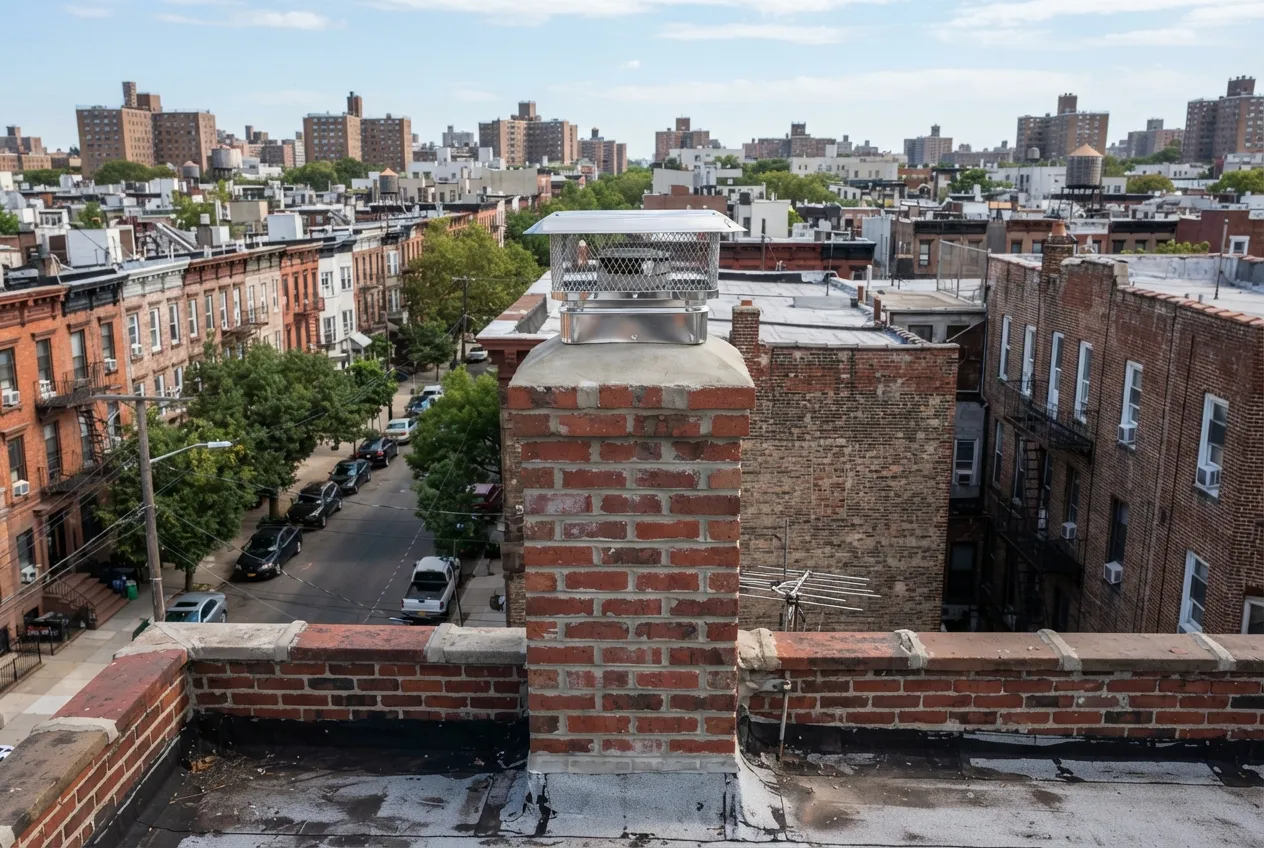
On the roof, we check the crown, cap, flashing and exterior brick, and look down the flue from the top. We only go up when it is safe to do so, and we use proper roof access for the building. If we cannot reach part of the chimney safely, we tell you what was and was not inspected rather than guessing.
The standard we follow: NFPA 211 and the three inspection levels
The NFPA 211 standard calls for chimneys, fireplaces and vents to be inspected once a year. Chimney professionals use three inspection levels, and we will tell you which one fits your situation before we start.
A Level 1 inspection is for chimneys where nothing has changed and the system is used the same way as before. A Level 2 inspection is called for when the system changes, such as a new appliance or a switch of fuel, or when the home is sold; it usually includes a camera inspection of the flue. A Level 3 inspection is needed only when a hidden hazard has to be reached by opening part of the chimney or building.
Fuel changes matter a lot in New York City. When a building converts its boiler from oil to gas, the chimney has to be evaluated as part of the work, and a new liner is often needed because gas exhaust produces acidic condensate that can corrode a masonry flue. Since the city's heat season runs from October 1 through May 31, it makes sense to have heating chimneys inspected before October so any repairs are done before the heat has to be on.
What affects the price
We quote each job after we know a few details about your home. The main factors are:
- Chimney height and how easy it is to reach the roof
- Fuel type: wood, gas or oil, and whether the flue serves a fireplace or a heating appliance
- Flue size, number of flues and the condition of the liner
- How much soot or creosote has built up
- Whether a camera inspection is needed
- Whether repairs, a cap, a liner or other work are needed afterward
How a visit works
When you contact us, we ask what type of chimney you have, what it serves, when it was last inspected and whether you have noticed any of the warning signs above. That tells us which inspection level is likely and what to bring.
On the day of the visit, the crew protects the work area, inspects the chimney inside and from the roof, and cleans up before leaving. We then walk you through the findings and show you photos or camera footage. If work is needed, we explain what it is, why it matters and what can wait. You decide what happens next, and nothing is done without your approval.
Chimney Inspection by city
- Chimney Inspection in Carroll Gardens
- Chimney Inspection in Cobble Hill
- Chimney Inspection in Gowanus
- Chimney Inspection in Red Hook
- Chimney Inspection in Park Slope
- Chimney Inspection in Windsor Terrace
- Chimney Inspection in South Slope
- Chimney Inspection in Prospect Heights
- Chimney Inspection in Brooklyn Heights
- Chimney Inspection in Downtown Brooklyn
- Chimney Inspection in DUMBO
- Chimney Inspection in Boerum Hill