
The short answer
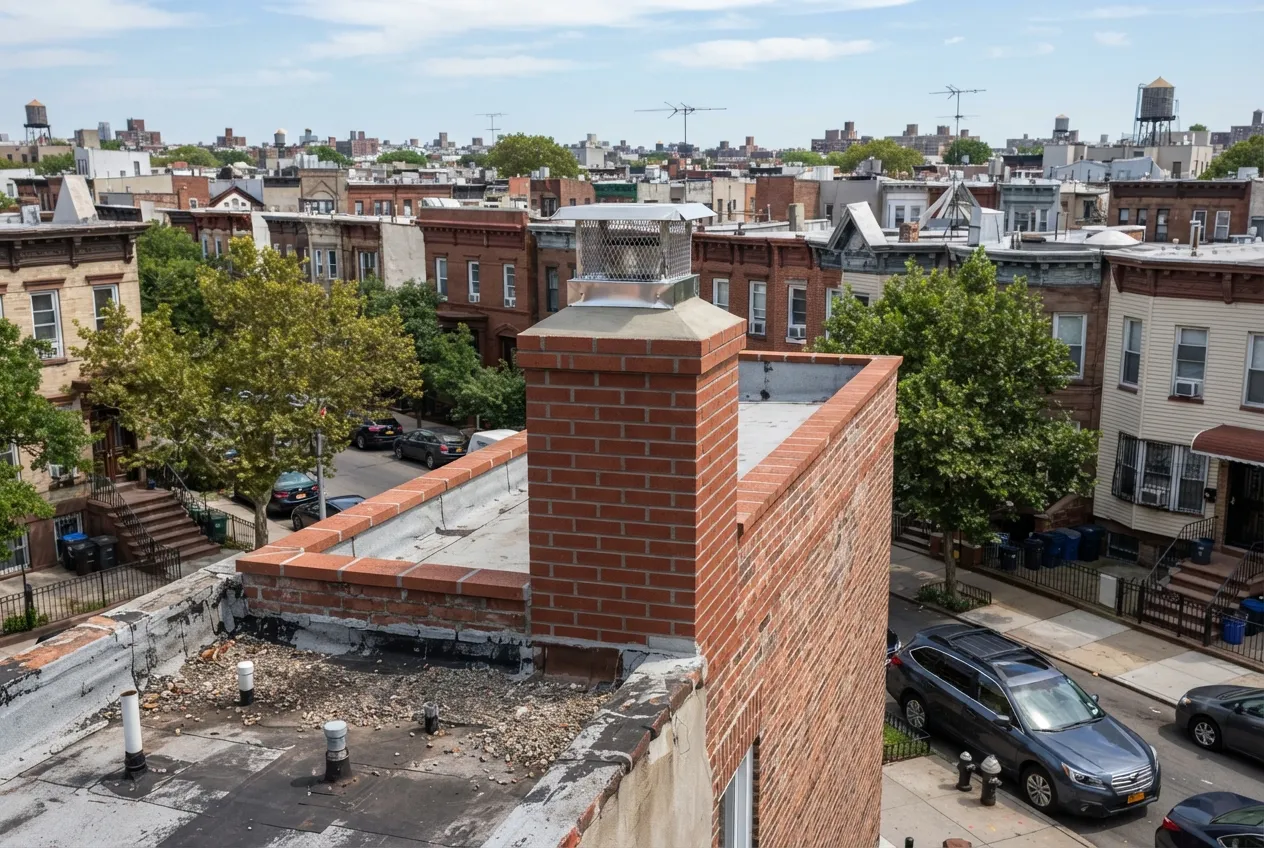
A chimney needs rebuilding when bricks are crumbling, mortar has washed out, or the structure is leaning or letting water in, and repointing alone can't fix it. ProSweep inspects the chimney, removes the damaged masonry, and rebuilds it with new brick, mortar, a crown, and flashing, plus a liner where one is needed.
A chimney takes a beating from both sides. Rain, snow, and freeze-thaw cycles work on the outside, while heat, moisture, and acidic exhaust work on the inside. When mortar joints wash out, bricks spall, or the crown cracks, patching only goes so far. At some point the safer fix is to take the damaged section down and rebuild it. ProSweep Chimney Service rebuilds chimneys for homeowners in Brooklyn and nearby areas, from a few courses above the roofline to a full teardown when the structure calls for it. This page covers the warning signs, what a rebuild includes, how our certified technicians work in your home and on your roof, and what drives the cost.
Signs you need it
Masonry damage usually builds slowly, so the early signs are easy to miss. Look in the firebox, at the brick on the outside, and at the ceiling and walls near the chimney. Any one of these deserves an inspection. Several together usually point to damage that goes deeper than surface repair.
- Brick flakes, sand, or mortar debris collecting in the firebox or on the smoke shelf
- White, chalky staining on the brick (efflorescence), which means water is moving through the masonry
- Water in the firebox, or stains on walls and ceilings near the chimney after rain
- Bricks that are cracked, spalling, or missing, or mortar joints you can scrape out with a fingertip
- A chimney that leans or pulls away from the house
- Poor draft or smoke that rolls into the room, which can follow a partial collapse inside the flue
- Animal noises in the chimney, which often mean there are gaps in the crown or brick that let them in
What's included
Every rebuild is sized to the damage we find. Some chimneys only need the portion above the roofline replaced. Others need to come down further. We explain the scope before any brick comes off, and the work covers the full weather-facing system, not just the bricks.
- Inspection of the chimney inside and out, including a camera look at the flue
- Careful teardown of damaged brick down to sound masonry
- Rebuilding with brick and mortar chosen to match the existing chimney as closely as possible
- A new crown shaped to shed water away from the flue
- New or reset flashing where the chimney meets the roof
- A chimney cap to keep out rain, debris, and animals
- Liner assessment, with a new liner installed when the flue is damaged or the appliance requires one
- Cleanup of the work area, and haul-away of old masonry
How our crew works in your home and on the roof
Most rebuild work happens outside, but the flue and firebox connect to your living space, so we protect the inside first. Before we start, the crew lays drop cloths from the door to the fireplace or appliance and seals the opening so dust and debris stay in the chimney, not in your room. HEPA vacuums run during any work that disturbs soot or mortar dust. Before a liner goes in, we clean the flue with rotary brushes, then run a camera to check the condition of the flue walls and to confirm the liner path is clear.
On the roof, we set up safe access and protect the roofing around the chimney before removing anything. Old brick is lowered or carried down rather than thrown, and the work area is cleaned at the end of each day. If weather turns, we cover open masonry so rain doesn't get into the flue or the house.
The standard we follow
We work to the NFPA 211 standard, which calls for chimneys, fireplaces, and vents to be inspected once a year. Chimney professionals use three inspection levels. A Level 1 inspection covers a system that hasn't changed. A Level 2 inspection is for changes to the system, such as a new appliance or a switch of fuel, or when a home is sold. A Level 3 inspection is used when a hidden hazard has to be reached by opening part of the chimney or building. Rebuild work usually starts at Level 2, and sometimes Level 3 when we suspect damage behind a wall or inside a chase.
Fuel changes matter too. When a New York City building converts its boiler from oil to gas, the chimney must be evaluated as part of the work, and a new liner is often needed. Gas exhaust produces acidic condensate that can corrode a masonry flue, which is a common reason we find deteriorated brick inside older chimneys.
What affects the price
We give you a written quote after the inspection, not before, because no two chimneys fail the same way. These are the factors that change the scope of the job:
- How much of the chimney has to come down, from a few courses to a full rebuild
- Chimney height, roof pitch, and how easy it is to reach the roof safely
- Fuel type and appliance, which determine whether a liner is needed and what kind
- Flue size, shape, and condition
- How much creosote or soot buildup has to be cleaned before work begins
- Whether a camera inspection or a Level 3 inspection is needed to find hidden damage
- Related repairs such as flashing, roof patching around the chimney, or a damper
How a visit works
You call or send a request, and we schedule an inspection. A certified technician examines the chimney from the firebox to the crown, runs a camera through the flue, and takes photos so you can see what we see. We walk you through the findings and give you a written scope and quote.
Once you approve the work, we schedule the rebuild around weather and your heating needs. New York City's heat season runs from October 1 through May 31, so if your boiler or furnace vents through the chimney, we plan the work to keep your heat interruption as short as possible. On rebuild days, the crew protects your home, completes the masonry, crown, flashing, and cap, and cleans up. At the end, we show you the finished work and photos of the flue.