
The short answer
A chimney liner is a protective channel inside the flue that carries exhaust safely out of the house and shields the masonry from heat and corrosive condensate. In Carroll Gardens, liners are most often needed when an older brick flue has deteriorated or when a building converts its boiler from oil to gas. ProSweep inspects the chimney first, then installs a liner sized to your heating appliance.
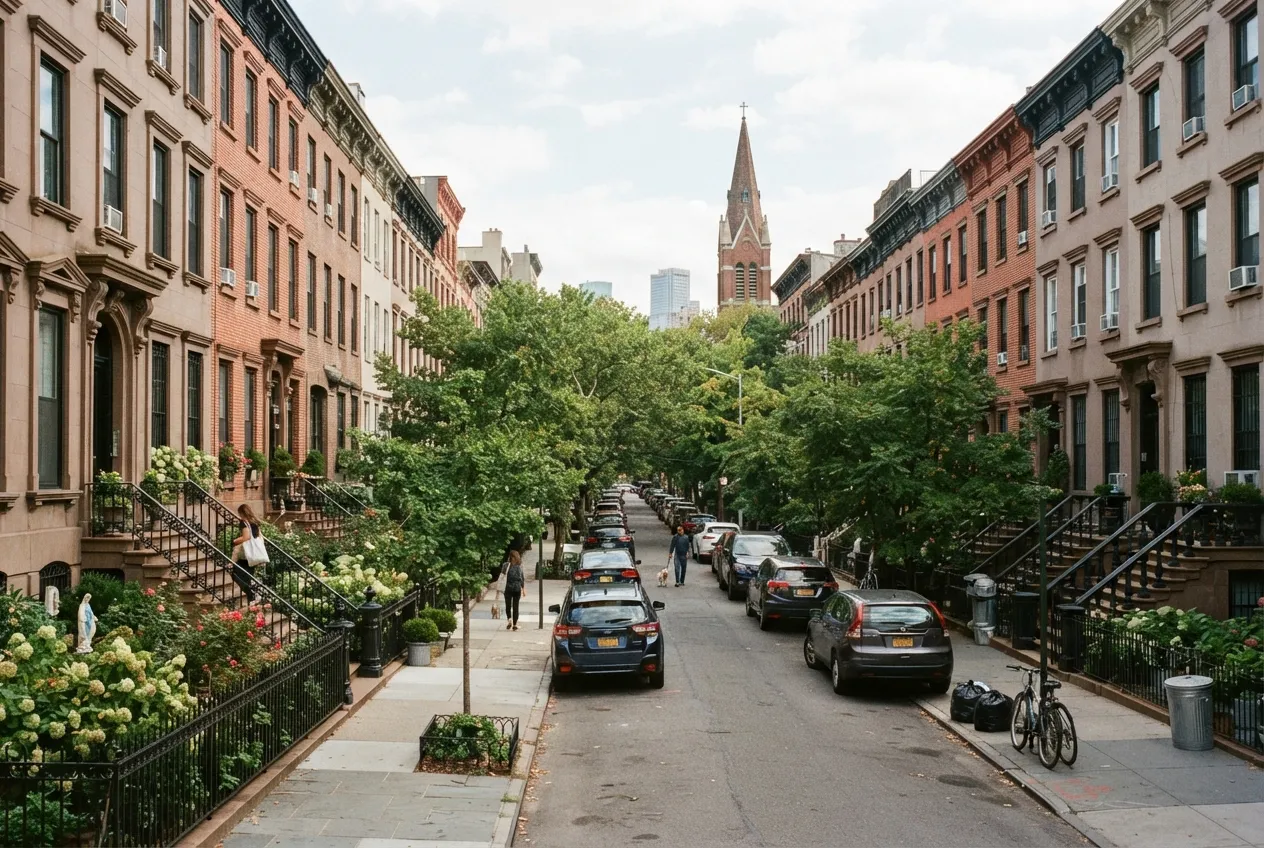
Many homes in Carroll Gardens were built long before modern boilers, furnaces and water heaters, and their chimneys often show it. Brownstones, rowhouses and pre-war apartment buildings in the 11231 ZIP code commonly have masonry flues that were never lined, or that were lined with clay tile that has since cracked or shifted. ProSweep Chimney Service installs chimney liners for homeowners and building owners in Carroll Gardens, about a mile northwest of our Brooklyn office. Our certified technicians inspect the flue, size the liner to the appliance it will serve, and install it so exhaust leaves your home the way it should.
Why Carroll Gardens Chimneys Often Need a New Liner
Most chimneys in this neighborhood are brick, and many have been in service for generations. Over that time, mortar joints wear down, clay tiles crack, and bare masonry absorbs moisture and combustion byproducts. A damaged or missing liner can let heat reach nearby wood framing and can allow exhaust, including carbon monoxide, to seep into living spaces or a neighboring wall in attached rowhouses.
Fuel conversions are another common reason. When a New York City building converts its boiler from oil to gas, the chimney has to be evaluated as part of the work, and a new liner is often needed. Gas exhaust produces acidic condensate that can corrode a masonry flue from the inside, so a flue that served an oil boiler for years may not be suitable for a gas appliance without a liner.
Signs Your Flue May Need a Liner
Some problems are visible from the basement or roof, while others only show up on a camera inspection. Call us if you notice any of the following:
- You are converting a boiler or water heater from oil to gas
- You are replacing a heating appliance with one of a different size or type
- Pieces of tile, brick or mortar are collecting at the base of the chimney
- Water stains, white residue or crumbling brick appear near the chimney
- An inspection has found cracked, gapped or missing flue tiles
- Exhaust odors or draft problems appear when the boiler or fireplace runs
How We Install a Chimney Liner
Every job starts with an inspection. Under the NFPA 211 standard, a change to the system, such as a new appliance or a switch of fuel, calls for a Level 2 inspection, which typically includes a camera look inside the flue. That tells us the flue's condition, its dimensions, any offsets or bends, and what the liner needs to accommodate.
Next, we match the liner to the appliance. The liner's size and material depend on the fuel, the appliance's venting requirements and the shape of the flue. A liner that is too large or too small can cause poor draft and condensation, so we size it to what the equipment actually needs rather than to the opening of the old chimney.
During installation, our technicians clean the flue, feed the liner down from the roof, connect it to the appliance at the bottom and secure it at the top with a cap. In rowhouses and brownstones with shared party walls and tight roof access, we plan the work so it stays inside your chimney and keeps disruption to the building to a minimum. Before we leave, we check the connection and walk you through what was done.
Timing the Work Around Heat Season
New York City's heat season runs from October 1 through May 31, and building owners must keep apartments heated to the city's minimum temperatures during that period. For owners of multi-unit brownstones and pre-war apartment buildings, that makes the off-season the most practical time for liner work, especially if it is tied to a boiler conversion.
If a problem turns up mid-winter, we can still help. We will talk through the scope of work with you and your heating contractor so the chimney portion fits into the boiler schedule and heat is restored as soon as practical.
Serving Carroll Gardens and Nearby Neighborhoods
Because Carroll Gardens is close to our office, scheduling an inspection here is straightforward. We also install chimney liners in nearby Cobble Hill, Gowanus, Red Hook, Park Slope and Brooklyn Heights, where many homes share the same older masonry construction and the same reasons for relining.
More services in Carroll Gardens
- Chimney Sweep in Carroll Gardens
- Chimney Inspection in Carroll Gardens
- Chimney Repair in Carroll Gardens
- Air Duct Cleaning in Carroll Gardens