The short answer
A chimney sweep clears soot, creosote and debris from your flue so smoke vents properly and buildup doesn't become a fire risk. The NFPA 211 standard calls for chimneys to be inspected once a year, so most homeowners should book a sweep and inspection annually, or sooner if they notice smells, poor draft or debris.
A chimney sweep removes the soot, creosote and debris that build up inside your flue every time you burn wood, oil or gas. In Brooklyn and the surrounding cities, many homes have older masonry chimneys, tight rooflines and fireplaces that sat unused for years, so what's inside the flue is often a surprise. Our certified technicians clean the full system from the firebox to the chimney cap, look it over as they work, and tell you plainly what they found. Below is what to watch for, what the work includes, how our crew handles your home, and how a visit runs from start to finish.
Signs you need a chimney sweep
Most chimney problems give you a warning before they become dangerous. If you notice any of these, schedule a sweep and inspection before you light another fire.
- A smoky or tar-like creosote smell in the room, often stronger on humid days or when the air conditioning runs
- Poor draft: smoke drifts into the room instead of rising up the flue, or fires are hard to start and keep going
- Black flakes, debris, or bits of brick and mortar collecting in the firebox
- White staining on the chimney brick, a sign that water is moving through the masonry
- Scratching, chirping or rustling inside the chimney, which usually means birds or animals are nesting
- Water dripping or pooling in the firebox after rain
- More than a year has passed since your last sweep and inspection, or you just bought the home
What's included in a chimney sweep
Every visit covers the full venting path, not just the part you can see from the hearth.
If something needs a closer look, such as cracked flue tiles or a damaged liner, we explain what we saw and what the next step would be. We don't start any additional work without your approval.
- Protecting the floor and furniture around the fireplace before work starts
- Brushing the flue from top to bottom to remove soot, creosote and loose debris
- Cleaning the smoke chamber, smoke shelf and damper area
- Cleaning the firebox and removing ash
- Checking that the damper opens, closes and seals
- Clearing nests and blockages that can be reached
- Checking the chimney cap, crown and visible brick from the roof
- A Level 1 inspection of the readily accessible parts of the system
- A plain-language rundown of what we found, with photos where they help
How our crew works inside your home and on the roof
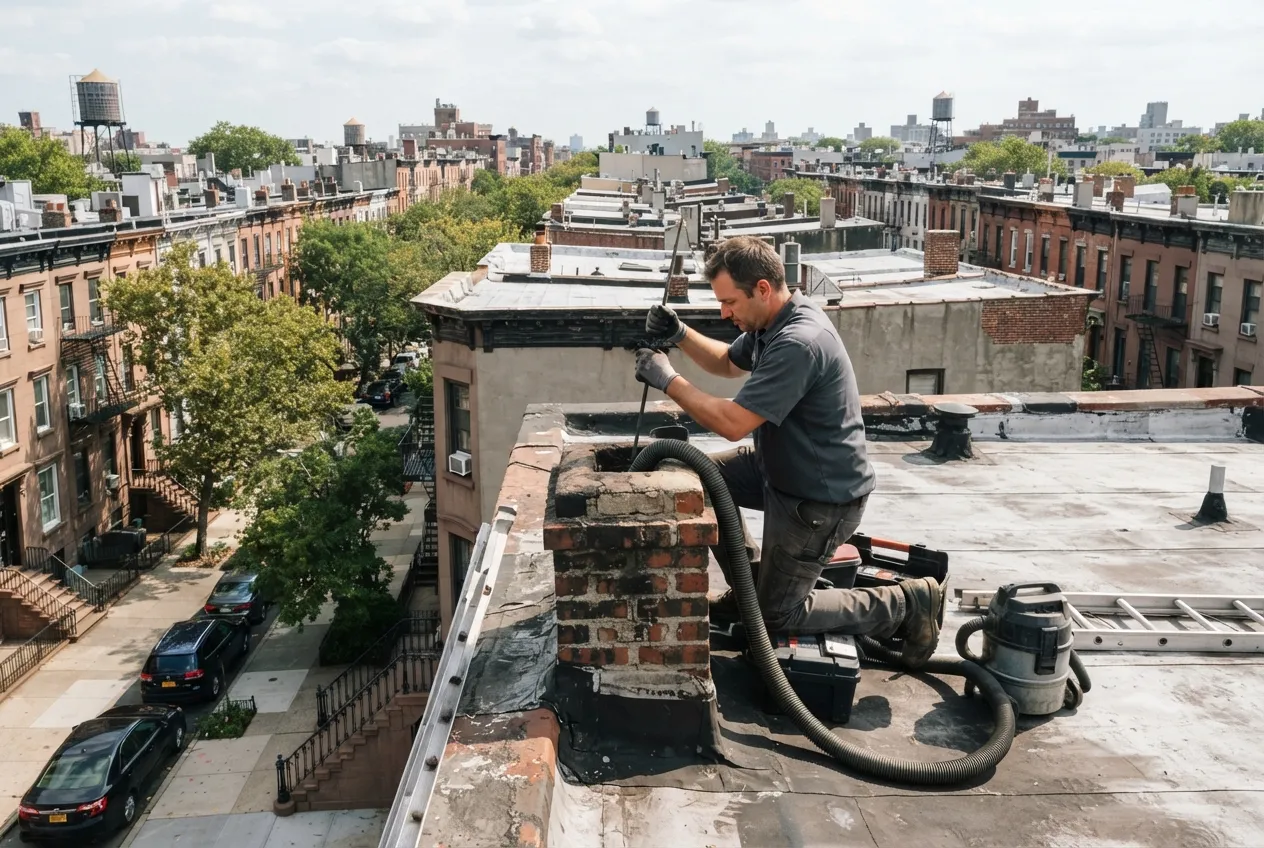
Inside, we lay drop cloths from the entry to the hearth and seal off the fireplace opening. A HEPA vacuum runs throughout the cleaning, pulling soot out of the air instead of letting it drift into your living room. We use rotary brushes sized to your flue; they spin against the walls and break up buildup that a hand brush can miss. Where it helps, we run a camera up the flue to see liner joints and walls that aren't visible from the firebox or the roof.
On the roof, we first figure out the safest way to reach the chimney. Many Brooklyn rowhouses and multi-family homes have flat roofs with hatch access, while others have pitched roofs that call for ladders and fall protection. From the top, we brush down where needed, check the cap and crown, and look for loose brick, open mortar joints and gaps in the flashing. Before we leave, we clean up the work area inside and out.
The standard we follow: NFPA 211
We follow NFPA 211, the national standard for chimneys, fireplaces and vents. It calls for these systems to be inspected once a year, even if you rarely use them. Chimney professionals use the three inspection levels listed below, and we'll tell you which one fits your situation.
In New York City, switching a boiler from oil to gas is one of the most common changes. The chimney has to be evaluated as part of that conversion, and a new liner is often needed because gas exhaust produces acidic condensate that can corrode a masonry flue. The city's heat season runs from October 1 through May 31, so late summer and early fall are good times to get your chimney swept and inspected before the heating system starts working hard.
- Level 1: used when nothing about the system has changed. It covers the readily accessible parts of the chimney, firebox and connections.
- Level 2: used when the system changes, such as a new appliance or a switch of fuel, or when the home is sold.
- Level 3: used when a hidden hazard has to be reached by opening part of the chimney or the building.
What affects the price
No two chimneys are the same, so the cost depends on what we're working with. We give you a clear quote before work begins. If we find something unexpected, we stop and talk with you before going further.
- Chimney height and roof access, such as a hatch, a ladder or a steep pitch
- Fuel type, since wood, oil and gas leave different kinds of residue
- Flue size, shape and condition, including whether it has a liner
- How much creosote or soot has built up, and whether it has hardened into a glaze
- Whether a camera inspection is needed to see inside the flue
- Any repairs, such as a new cap, crown work or a liner
How a visit works
When you book, tell us what fuel you burn, when the chimney was last cleaned, and any warning signs you've noticed. That helps us bring the right brushes and equipment.
Before we arrive, don't use the fireplace or stove for at least a day so the system is cool, and clear a path to the hearth and to the roof access if you have one. On site, we set up protection, clean the flue and firebox, work from the roof as needed, and inspect as we go. At the end, we walk you through what we found, show you photos, and explain any recommendations so you can decide what to do next.
Chimney Sweep by city
- Chimney Sweep in Carroll Gardens
- Chimney Sweep in Cobble Hill
- Chimney Sweep in Gowanus
- Chimney Sweep in Red Hook
- Chimney Sweep in Park Slope
- Chimney Sweep in Windsor Terrace
- Chimney Sweep in South Slope
- Chimney Sweep in Prospect Heights
- Chimney Sweep in Brooklyn Heights
- Chimney Sweep in Downtown Brooklyn
- Chimney Sweep in DUMBO
- Chimney Sweep in Boerum Hill