The short answer
A chimney liner protects masonry and nearby framing from heat and corrosive exhaust and helps gases draft out of the home. In Downtown Brooklyn, a new liner is most often needed when a building converts its boiler from oil to gas, when an old clay or unlined flue is damaged, or when a new appliance is installed.
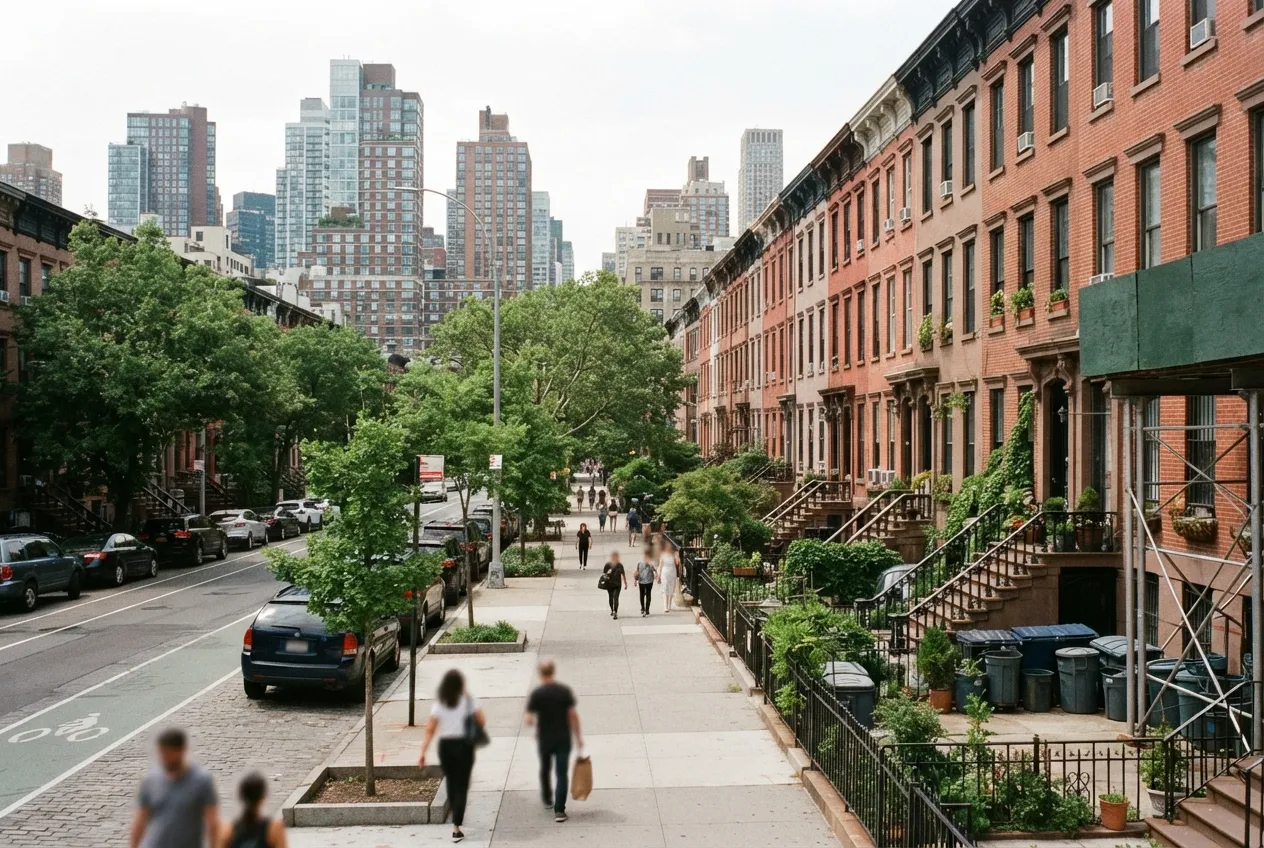
Downtown Brooklyn mixes brownstones and rowhouses on its quieter streets with pre-war apartment buildings and newer residential towers. Many of the older masonry chimneys here were built before modern liners were common, or were lined for oil heat that has since changed. ProSweep Chimney Service installs and replaces chimney liners for homes and buildings in ZIP code 11201, about 2 miles north of our Brooklyn office. Our certified technicians inspect the flue first, explain what we find in plain terms, and fit a liner sized to the appliance it serves.
Why Liners Matter in Older Downtown Brooklyn Chimneys
Most masonry chimneys in older Brooklyn rowhouses and brownstones were built with clay tile flues or with no liner at all. Over decades, heat cycles, moisture and settling can crack tiles, wash out mortar joints and leave gaps where heat and exhaust reach the brick and the wood framing around it.
A sound liner does three jobs. It shields the masonry and nearby framing from heat, it resists the acids in combustion exhaust, and it gives the appliance a flue of the right size so gases draft up and out instead of lingering or backing into living space.
Fireplaces, gas boilers, oil boilers and wood stoves each produce different exhaust temperatures and moisture levels, so a liner that suits one may not suit another. A liner that was right decades ago can be the wrong fit after an equipment change.
Oil-to-Gas Conversions and New Liners
When a New York City building converts its boiler from oil to gas, the chimney has to be evaluated as part of the work. A new liner is often needed, because gas exhaust produces acidic condensate that can corrode a masonry flue that held up fine with oil.
We recommend scheduling the chimney evaluation early in planning, not after the new boiler is set. The city's heat season runs from October 1 through May 31, when owners must keep apartments heated to the city's minimum temperatures, so a conversion and liner install planned for late spring or summer leaves room to finish before heat is required.
How a Liner Installation Works
Every job starts with an inspection. The NFPA 211 standard calls for chimneys, fireplaces and vents to be inspected once a year, and a change to the system, such as a new appliance or a switch of fuel, calls for a Level 2 inspection. We look along the full length of the flue to check its size, condition and any offsets before recommending a liner.
- Inspect the chimney and confirm which appliance or fireplace the flue serves
- Measure the flue and match liner size and material to the appliance
- Clean the flue so the liner goes into a clear passage
- Install the liner from the top, connect it at the appliance and cap it at the crown
- Add insulation where the chimney or appliance calls for it
- Check draft and walk you through what was done
Signs Your Flue May Need a New Liner
Some problems show up inside the home; others only appear during an inspection. If you notice any of these, limit use of the appliance until the flue is checked, and keep carbon monoxide alarms working on every level.
- Flakes of tile or masonry collecting in the fireplace or cleanout
- Water stains, white residue or damp spots on walls near the chimney
- A boiler or water heater that was recently replaced or switched to gas
- Smoke or fumes that linger instead of drafting up
- An inspection report noting cracked tiles, gaps or no liner
- Plans to sell the home, which calls for a Level 2 inspection
Working in Downtown Brooklyn Buildings
Chimneys here often run through several stories of a rowhouse or pre-war apartment building, with roof access through a hatch or bulkhead. We plan access ahead of time, protect floors and hearths, and coordinate with building management or neighbors when a shared roof is involved.
We serve homes across 11201 and nearby DUMBO, Boerum Hill, Brooklyn Heights, Carroll Gardens and Cobble Hill. If a Level 3 inspection is needed because a hidden hazard has to be reached by opening part of the chimney or building, we explain why before anything is opened.
More services in Downtown Brooklyn
- Chimney Sweep in Downtown Brooklyn
- Chimney Inspection in Downtown Brooklyn
- Chimney Repair in Downtown Brooklyn
- Air Duct Cleaning in Downtown Brooklyn