
The short answer
Chimney waterproofing protects brick and mortar from water damage by repairing entry points like the crown, cap, and flashing, then applying a breathable water repellent to the masonry. If you see water in the firebox, white staining on the brick, or flaking brick, have the chimney inspected before you seal it.
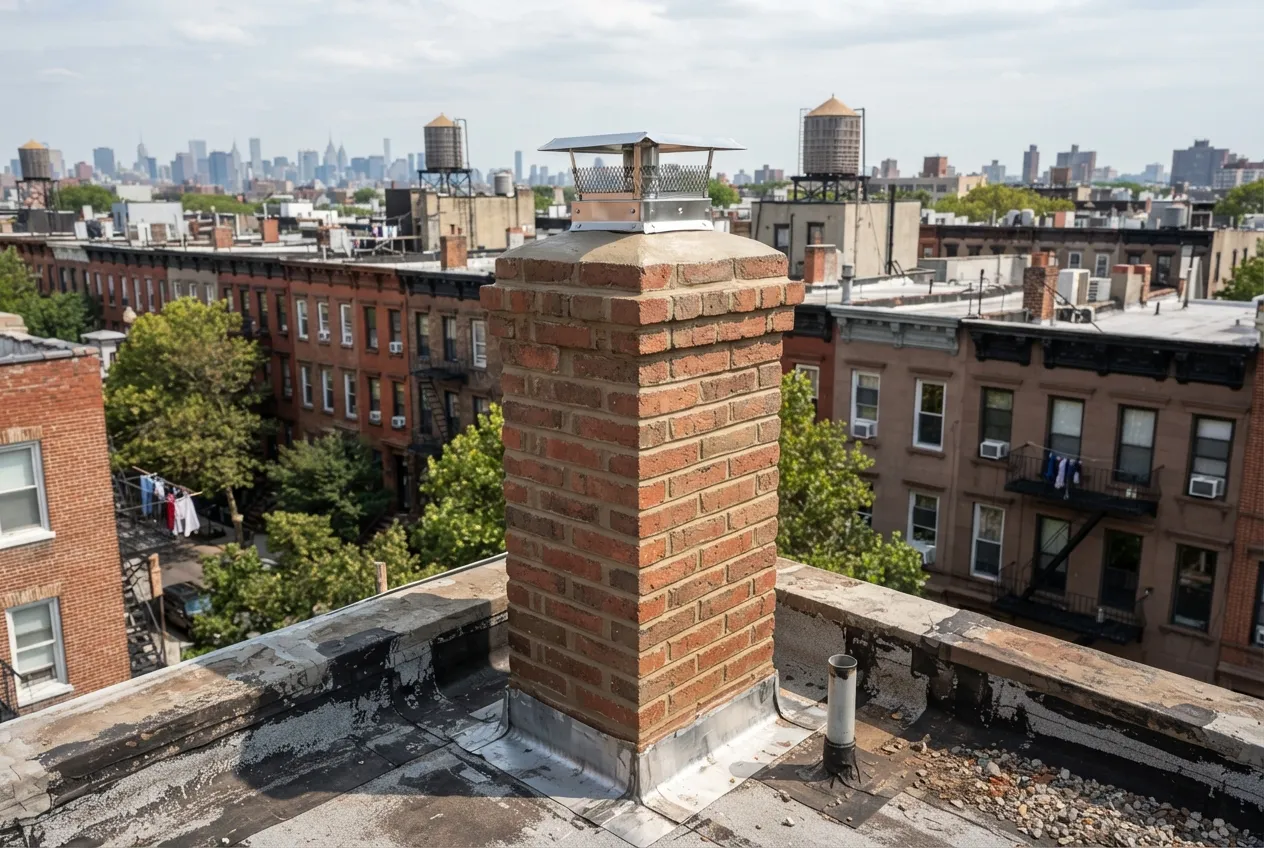
Water is one of the main threats to a masonry chimney. Brick and mortar are porous, so rain and melting snow soak in, freeze, expand, and slowly break the masonry apart from the inside. In Brooklyn and the surrounding cities, freeze-thaw cycles, wind-driven rain, and older brick rowhouse chimneys make this a common problem. ProSweep Chimney Service waterproofs chimneys by first finding and fixing where water is getting in, then treating the masonry with a breathable water repellent that keeps rain out while letting trapped moisture escape. Our certified technicians inspect the whole system first, because sealing brick does little good if the crown is cracked or the flashing is loose.
Signs you need it
Water damage in a chimney usually shows up slowly. Many homeowners first notice it inside the fireplace or on a ceiling or wall next to the chimney. If you see any of these signs, have the chimney looked at before the next freeze-thaw season makes the damage worse.
- Water or damp spots in the firebox, especially after rain or snowmelt
- White, chalky staining on the brick (efflorescence), which means water is moving through the masonry and leaving salts behind
- Brick flakes, mortar chips, or other debris collecting in the firebox
- A musty smell or a stronger creosote odor from the fireplace in damp weather
- Rusted damper, firebox parts, or chimney cap
- Water stains or peeling paint on ceilings or walls next to the chimney
- Spalling brick on the outside, where the face of the brick pops off
- Poor draft, which can come from a flue liner damaged by moisture
What's included in a ProSweep waterproofing service
Waterproofing is more than spraying a product on brick. We start by finding the source of the water, because a sealer cannot fix a cracked crown, a missing cap, or failed flashing. Once those entry points are dealt with, we treat the masonry. If we find something that needs a separate repair, we explain it and show you photos before any additional work begins.
- Inspection of the chimney exterior, crown, cap, flashing, and the firebox and damper inside
- Camera inspection of the flue when moisture damage to the liner is suspected
- Cleaning of loose debris, moss, and surface buildup from the masonry so the repellent can absorb properly
- Check of mortar joints for cracks and gaps that need repointing before sealing
- Evaluation of the crown for cracks, with sealing or repair recommendations
- Check that the chimney cap fits and keeps rain and animals out of the flue
- Inspection of roof flashing where the chimney meets the roof
- Application of a vapor-permeable water repellent made for masonry chimneys
- Photos and a written summary of what we found and what we did
How our crew works inside your home and on the roof
Inside, we lay drop cloths from the door to the fireplace and cover the hearth area before opening anything. If the flue needs cleaning before inspection, we use rotary brushes with HEPA vacuums running so soot and dust stay out of your living space. A camera lets us see the inside of the flue and check the liner for cracks, gaps, or moisture damage that you can't see from the firebox.
On the roof, we work from the top down. We check the cap, crown, and flashing, clean the brick surface, and confirm the mortar is sound. The water repellent is applied only to clean, dry masonry, since applying it to wet brick or on a rainy day keeps it from soaking in. We use breathable products rather than paint or film-forming sealers, because those can trap moisture in the brick and make spalling worse. When we're done, we clean up the work area on the roof and inside the house.
The standard we follow
Our inspections follow NFPA 211, a fire safety standard that calls for chimneys, fireplaces, and vents to be inspected once a year. Chimney professionals use three inspection levels. A Level 1 inspection is for a system that hasn't changed. A Level 2 inspection is for when something changes, such as a new appliance, a switch of fuel, or the sale of the home. A Level 3 inspection is for when a hidden hazard can only be reached by opening part of the chimney or the building. Most waterproofing visits begin with a Level 1 or Level 2 inspection.
Moisture also matters if your home has converted, or plans to convert, from oil to gas heat. In New York City, the chimney has to be evaluated as part of an oil-to-gas boiler conversion, and a new liner is often needed because gas exhaust creates acidic condensate that can corrode a masonry flue. If water is already getting into the masonry, that's worth knowing before a conversion.
What affects the price
Every chimney is different, so we quote after we've seen the job. These are the main factors that affect the cost of waterproofing:
- Chimney height and how easy it is to reach the roof safely
- Fuel type the chimney serves, such as wood, gas, or oil
- Flue size and condition, including any liner damage
- How much surface buildup, moss, or old coating has to be removed before treatment
- Whether a camera inspection is needed
- Whether repairs like repointing, crown work, a new cap, or flashing are needed before sealing
How a visit works
When you call, we'll ask about what you've noticed, the type of heating system the chimney serves, and how to reach the roof. We schedule the visit for dry weather, because the repellent needs dry masonry to work. Late spring through early fall is ideal, and it gets the work done before New York City's heat season starts on October 1.
On the day of the visit, the technician inspects the chimney, explains what they found, and shows you photos. If repairs are needed before waterproofing, you'll get a clear explanation and a quote before we do anything else. Once you approve the work, we clean and prepare the masonry, apply the treatment, and clean up. Plan on having the fireplace or appliance unused while we work, and we'll tell you when it's okay to use it again.