
The short answer
Chimneys, fireplaces and vents should be inspected once a year under the NFPA 211 standard, and more thoroughly when you change appliances or fuel, buy a home, or suspect hidden damage. In Prospect Heights, that matters most in older brownstones, rowhouses and pre-war buildings, especially any converting from oil to gas.
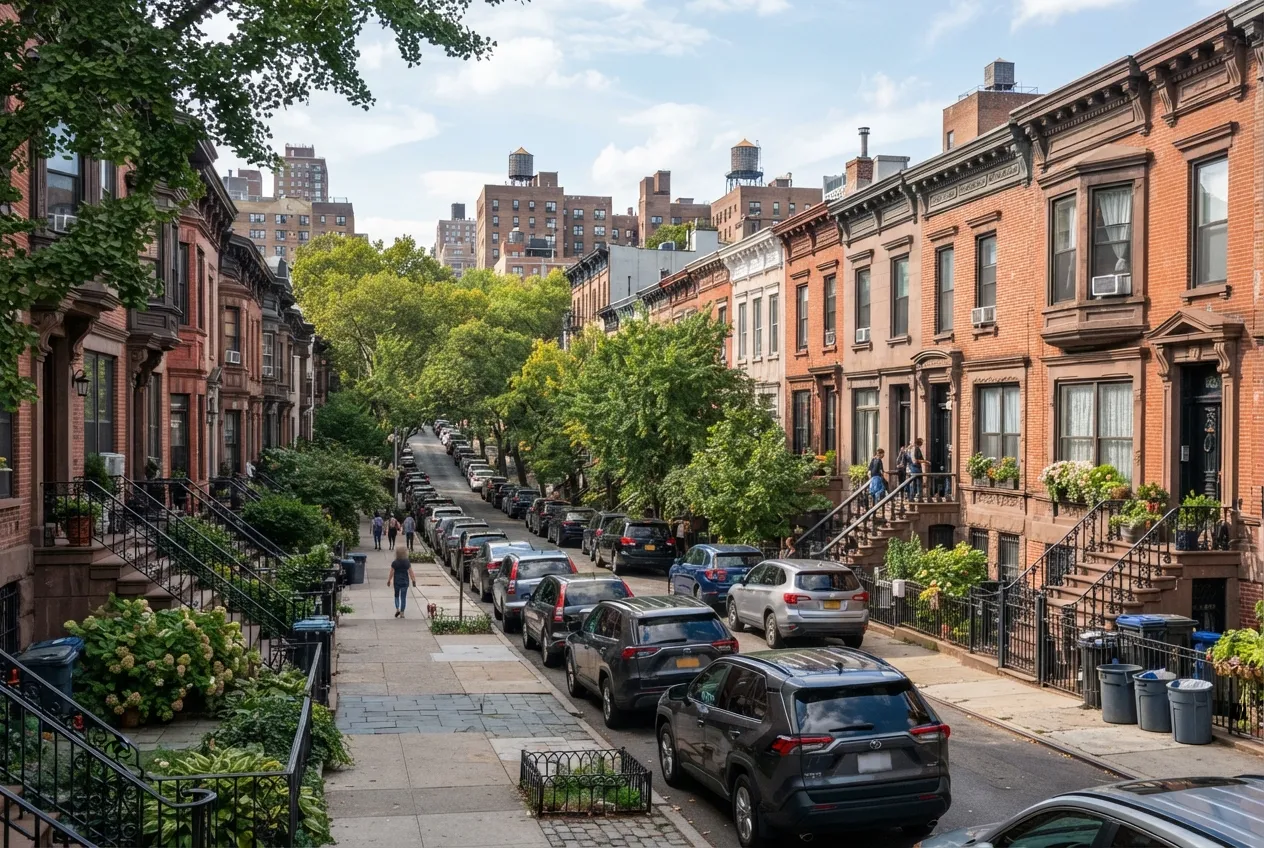
Many Prospect Heights chimneys have been in service for a long time. Brownstones and rowhouses often have several flues inside one masonry stack, and pre-war apartment buildings may vent boilers through chimneys built for a different fuel. A chimney inspection shows what condition those flues are in before you light a fire or the heat comes on for the season. ProSweep Chimney Service is based in Brooklyn, about a mile west of Prospect Heights. Our certified technicians inspect fireplaces, boiler and furnace flues, and appliance vents in homes and buildings throughout the neighborhood.
Why Prospect Heights Chimneys Need a Yearly Look
The NFPA 211 standard calls for chimneys, fireplaces and vents to be inspected once a year, even if they seem to work fine. Damage inside a flue is rarely visible from the room. Over time, mortar joints wear, clay tile liners crack, creosote builds up, and debris or nests can block the flue.
Older Brooklyn housing adds its own questions. A brownstone may have several fireplaces, and some may have been closed off, converted, or left decorative by past owners. Before you use a fireplace you haven't used before, find out whether it is safe to burn in. A rowhouse may share a party wall with a neighbor's chimney. An inspection tells you which flues serve what and what shape they are in.
Which Inspection Level Your Home Needs
Chimney professionals use three inspection levels. The right one depends on what has changed since the last inspection.
- Level 1: For a chimney that is used the same way as before with no changes. This is the routine yearly check of the accessible parts of the chimney, fireplace or vent.
- Level 2: For when the system changes, such as a new boiler, furnace, stove or insert, or a switch from one fuel to another. Also needed when a home is sold, so it is a sensible step when buying a brownstone or rowhouse.
- Level 3: For when a hidden hazard is suspected and the only way to reach it is to open part of the chimney or building, such as a wall or chase. This is not routine.
Oil-to-Gas Conversions in Neighborhood Buildings
Many pre-war apartment buildings and larger rowhouses in Prospect Heights have moved, or are planning to move, from oil heat to gas. In New York City, the chimney has to be evaluated as part of that conversion.
A new liner is often needed. Gas exhaust produces acidic condensate that can corrode a masonry flue originally built for oil. If your building is planning a conversion, schedule the chimney evaluation early so a liner, if needed, is not a surprise late in the project.
Timing Your Inspection Around Heat Season
New York City's heat season runs from October 1 through May 31. During that time, building owners must keep apartments heated to the city's minimum temperatures. A boiler flue problem found in January is harder to deal with than one found in August, because the heat has to stay on.
Late spring and summer are the easiest times to inspect boiler chimneys and fireplace flues. Any repairs can then be finished before the heating system is needed again. Homeowners who use a fireplace mainly in winter benefit from the same timing.
What Happens During the Visit
An inspection is focused on finding and explaining problems, not on selling a particular repair. Here is what to expect:
- We ask which fireplaces, appliances and vents use the chimney and whether anything has changed.
- We check the firebox, damper, smoke chamber and visible flue, and the connections from boilers, furnaces or water heaters.
- Where the flue can't be seen directly, a camera may be run up the chimney.
- We look at the exterior stack, crown and cap where they can be safely reached.
- We explain what we found, what needs attention now, and what can wait.
More services in Prospect Heights
- Chimney Sweep in Prospect Heights
- Chimney Repair in Prospect Heights
- Air Duct Cleaning in Prospect Heights
- Chimney Liner Installation in Prospect Heights