
The short answer
Chimneys in Brooklyn Heights should be inspected once a year, as the NFPA 211 standard calls for. Book a more detailed inspection after a boiler conversion, a new appliance, or a home sale. ProSweep's certified technicians inspect fireplace and boiler flues in brownstones, rowhouses and pre-war buildings across the neighborhood.
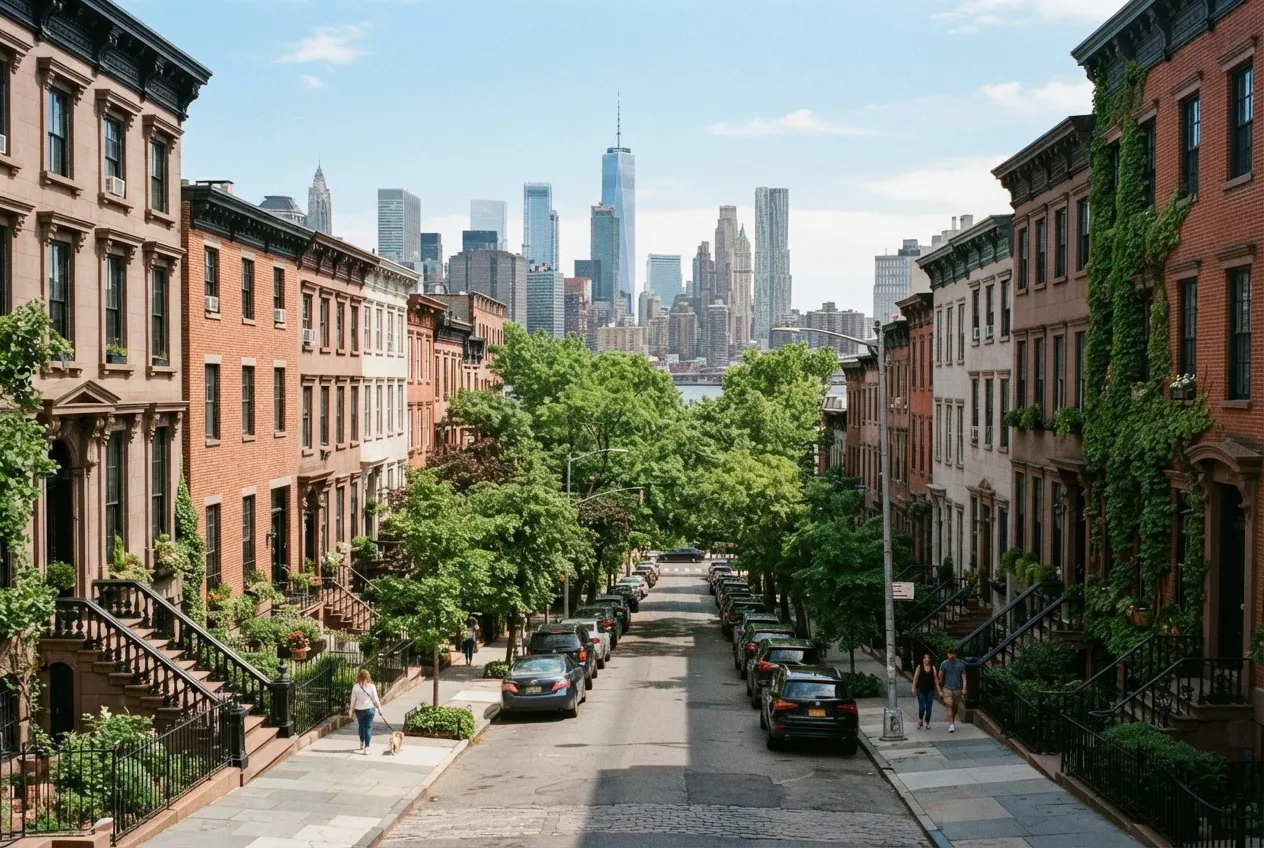
Brooklyn Heights is full of brownstones, rowhouses and pre-war apartment buildings, and many of their chimneys have been working for generations. A single stack may hold several flues: one for a boiler, others for parlor-floor and bedroom fireplaces that may or may not still be in use. Over the decades, mortar wears, liners crack, and renovations change how a chimney is used, often without anyone looking inside. ProSweep Chimney Service's certified technicians inspect chimneys throughout Brooklyn Heights, about 2 miles from our Brooklyn office. We tell you plainly what we found and what, if anything, needs attention.
Why Older Brooklyn Heights Chimneys Need a Closer Look
Most chimneys in the neighborhood are brick masonry built long before modern heating equipment existed. Many were later fitted with liners, partly sealed off, or tied into new boilers during renovations. Each change can leave gaps, mismatched flue sizes, or deteriorated sections hidden behind walls and above ceilings.
In a rowhouse or brownstone, the chimney often shares party walls with the neighbors, and several fireplaces may feed into one stack. A crack in one flue can let smoke or gases move into another flue or into living space. An inspection checks each flue separately, so you know which ones are safe to use and which are not.
Which Inspection Level Fits Your Home
The NFPA 211 standard calls for chimneys, fireplaces and vents to be inspected once a year. Chimney professionals use three inspection levels, and the right one depends on what has happened since the last inspection.
- Level 1: For a chimney used the same way with no changes. We check the accessible parts of the chimney, firebox, damper and connections, and look for blockages and buildup.
- Level 2: For a changed system, such as a new boiler, a new insert or stove, or a switch from one fuel to another. Also used when a home is being sold. This includes a camera inspection of the flue's interior.
- Level 3: For a suspected hidden hazard that can only be reached by opening part of the chimney or the building, such as after a chimney fire or when damage is concealed inside a wall.
Boiler Flues and Oil-to-Gas Conversions
Many Brooklyn Heights buildings have converted, or plan to convert, their boilers from oil to gas. In New York City, the chimney has to be evaluated as part of that work. A new liner is often needed, because gas exhaust produces acidic condensate that can corrode a masonry flue from the inside.
If your building has already converted, we can check that the existing liner fits the new equipment and shows no corrosion or blockage. If a conversion is coming up, an inspection beforehand tells you and your contractor what condition the flue is in before work begins.
What We Check During an Inspection
We look at the whole venting system, not just the fireplace opening. After the visit you get a clear explanation of the chimney's condition, with photos where they help.
- Crown, cap and the exterior masonry above the roofline
- Flue liner condition, including cracks, gaps and corrosion
- Creosote and soot buildup inside fireplace flues
- Damper operation and the firebox, smoke chamber and hearth
- Boiler and water heater connector pipes where they enter the chimney
- Signs of water entry, animal nests or debris blocking the flue
Timing Your Inspection Around Heat Season
New York City's heat season runs from October 1 through May 31, when building owners must keep apartments heated to the city's minimum temperatures. For owners of multi-unit buildings, a boiler chimney problem found in January is much harder to fix than one found in late summer. Schedule boiler flue inspections before October so any repairs can be finished while the heat is off.
For fireplaces, an inspection before you light your first fire of the season makes sense. Repeat it any time you notice smoke backing up, strong odors, falling debris or water stains near the chimney.
Serving Brooklyn Heights and Nearby Neighborhoods
Our technicians regularly work in brownstones, rowhouses, pre-war apartment buildings and the occasional detached home throughout the area. Besides Brooklyn Heights, we inspect chimneys in Downtown Brooklyn, DUMBO, Boerum Hill, Carroll Gardens and Cobble Hill. Tell us about your building and how you use the chimney, and we will recommend the inspection level that fits.
More services in Brooklyn Heights
- Chimney Sweep in Brooklyn Heights
- Chimney Repair in Brooklyn Heights
- Air Duct Cleaning in Brooklyn Heights
- Chimney Liner Installation in Brooklyn Heights