
The short answer
Under the NFPA 211 standard, chimneys, fireplaces and vents in DUMBO homes should be inspected once a year. A Level 1 inspection fits most homes where nothing has changed. A new appliance, a fuel switch such as an oil-to-gas conversion, or a home sale calls for a Level 2.
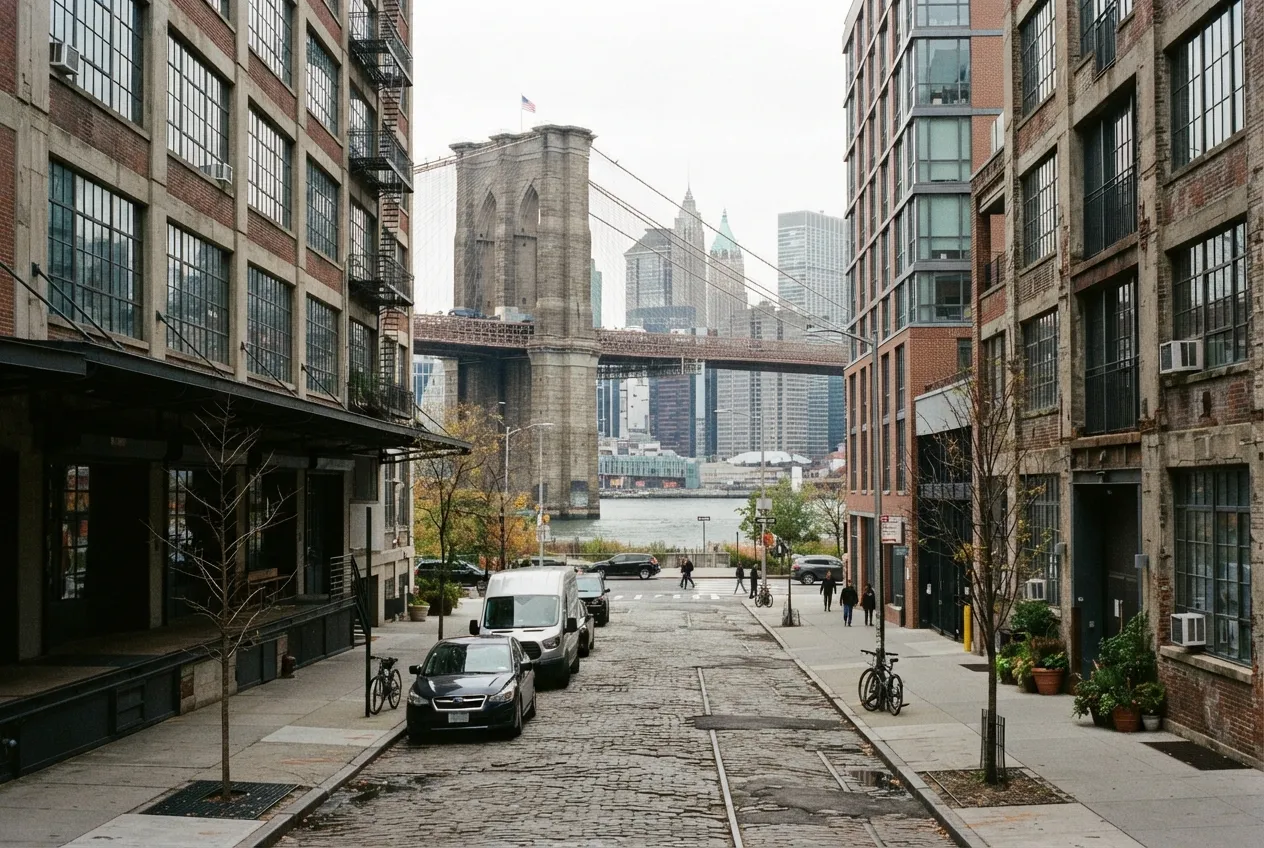
DUMBO's housing mixes converted loft buildings, pre-war apartment buildings and a smaller number of rowhouses. Many of them still rely on masonry chimneys built for an earlier era of heating. ProSweep Chimney Service inspects chimneys, fireplaces and vents for homeowners and building owners in DUMBO, ZIP code 11201, from our office about 2 miles south in Brooklyn. Our certified technicians check the whole venting path, explain what they find in plain terms, and tell you which inspection level your situation actually calls for.
Which Inspection Level Fits Your DUMBO Home
The NFPA 211 standard calls for chimneys, fireplaces and vents to be inspected once a year. Chimney professionals use three inspection levels. The right one depends on what has happened to your system since it was last checked.
For most DUMBO homeowners whose fireplace or boiler flue hasn't changed, a Level 1 inspection each year is enough. Ask for a Level 2 if you just bought a home, are adding an appliance or are planning a fuel switch.
- Level 1: For a chimney in regular use when nothing has changed. We examine the readily accessible parts of the fireplace, flue, chimney exterior and appliance connections.
- Level 2: When the system changes, such as a new boiler, furnace, insert or stove, or a switch from one fuel to another, and when a home is sold. This adds a closer look at the flue interior, typically with a camera.
- Level 3: When a hidden hazard has to be reached by opening part of the chimney or the building. We recommend this only when earlier findings point to a problem we can't evaluate any other way.
Older Chimneys in Converted and Pre-War Buildings
Many DUMBO residences are in buildings that were adapted from other uses, or that were built long before modern heating appliances existed. Over the decades, chimneys in buildings like these may be shortened, rerouted, shared between units or partly closed off during renovations. That history isn't always documented. An inspection is often the first clear picture an owner gets of how the flue actually runs.
In rowhouses and brownstone-style homes, we often find a fireplace that hasn't been used in years next to a separate flue that still serves the boiler or water heater. Both need attention. An unused flue can collect debris or nesting material. An active one can deteriorate where you can't see it. During an inspection, we look for:
- Cracked or missing flue tiles and gaps in mortar joints
- Soot and creosote buildup in wood-burning fireplaces
- Blockages from debris, nests or fallen masonry
- The condition of the crown, cap, flashing and exterior brick
- Connector pipes and clearances for boilers, furnaces and water heaters
Oil-to-Gas Conversions and Chimney Liners
When a New York City building converts its boiler from oil to gas, the chimney has to be evaluated as part of the work. A new liner is often needed because gas exhaust produces acidic condensate, which can corrode a masonry flue that held up fine under oil.
Your building may be planning a conversion, or may have finished one without a close look at the chimney. Either way, a Level 2 inspection tells you whether the existing flue can safely serve the new equipment or whether a liner should be part of the project. We document what we see so your contractor and building team work from the same information.
Timing Your Inspection Around Heat Season
New York City's heat season runs from October 1 through May 31. During those months, building owners must keep apartments heated to the city's minimum temperatures. In a building that depends on a boiler, a venting problem found mid-winter can mean an urgent repair at the worst possible time.
Scheduling your annual inspection in late spring or summer leaves time to plan any repairs before the heat comes on. The same timing helps owners of wood-burning fireplaces. Creosote and any damage from the past season are easier to deal with before the next season starts.
Serving DUMBO and Nearby Neighborhoods
Besides DUMBO, we inspect chimneys in Downtown Brooklyn, Brooklyn Heights, Boerum Hill, Cobble Hill and Carroll Gardens. After each visit, we give you a straightforward explanation of the chimney's condition and any recommended next steps, with photos where they help show what we found. If everything checks out, we tell you that too.
We regularly work in occupied homes and apartment buildings. We protect floors and furniture near the fireplace, and when needed we coordinate roof and boiler room access with building staff.
More services in DUMBO
- Chimney Sweep in DUMBO
- Chimney Repair in DUMBO
- Air Duct Cleaning in DUMBO
- Chimney Liner Installation in DUMBO