
The short answer
ProSweep Chimney Service repairs chimney crowns, mortar joints, flashing, caps and flue liners for brownstones, rowhouses and pre-war buildings in Cobble Hill. Every repair starts with an inspection, so our certified technicians fix the cause of the damage. That includes relining chimneys after oil-to-gas boiler conversions.
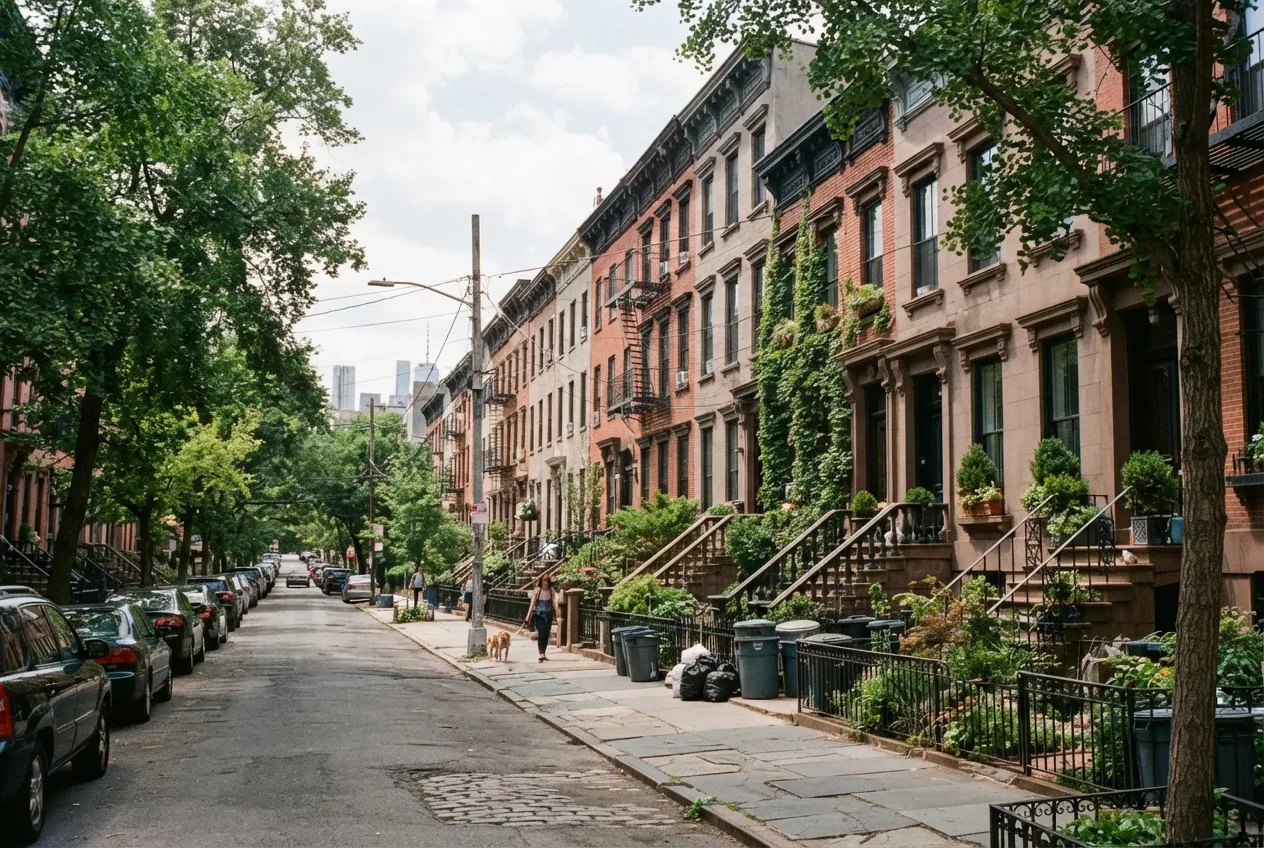
Most chimneys in Cobble Hill sit on top of brownstones, rowhouses and pre-war apartment buildings, and many of them have been working for a very long time. Over the years, brick and mortar wear down, crowns crack, flashing pulls away from the roof, and old clay flue tiles shift or break. ProSweep Chimney Service repairs chimneys throughout ZIP code 11231, about a mile northwest of our Brooklyn office. Our certified technicians start by finding out what is actually wrong and explain it in plain terms. Then they fix the problem that is causing the damage, not just the symptom.
What Wears Out on Cobble Hill Chimneys
Older masonry chimneys in this part of Brooklyn tend to fail in the same few places. Rowhouses share party walls and often share chimney stacks, so a problem on one roof can affect the flue next door. We look at how your chimney is built before we recommend any work.
- Crowns: The concrete or mortar cap at the top cracks during freeze-thaw cycles and lets water into the brick below.
- Mortar joints: Eroded or crumbling joints loosen bricks and let moisture into the chimney and nearby walls.
- Flashing: The seal where the chimney meets a flat or low-slope roof separates over time and causes leaks into top-floor ceilings.
- Flue liners: Cracked or missing clay tiles let heat and exhaust reach brick and framing that were never meant to handle them.
- Caps and screens: Missing or rusted caps let in rain, debris and animals.
- Spalling brick: The faces of bricks flake off when water gets in and freezes.
Oil-to-Gas Conversions and Relining
Many Brooklyn buildings have converted their boilers from oil to gas, and others are planning to. In New York City, the chimney has to be evaluated as part of that work. A new liner is often needed, because gas exhaust produces acidic condensate that can corrode a masonry flue that was built for oil.
If you are planning a conversion or replacing a boiler or water heater, bring us in early. We can inspect the flue and tell you whether the existing liner is suitable. If it is not, we can install a properly sized liner. Leaving this until the end of a project can delay getting the heat back on.
How We Approach a Repair
Every repair starts with an inspection. The NFPA 211 standard calls for chimneys, fireplaces and vents to be inspected once a year, and it describes three levels. A Level 1 inspection fits when nothing has changed. A Level 2 inspection applies when the system changes, such as a new appliance or a switch of fuel, or when the home is sold. A Level 3 inspection is used when a hidden hazard can only be reached by opening part of the chimney or building.
After the inspection, we walk you through what we found, with photos where possible. We separate what needs attention now from what can be planned for later. Then we schedule the repair, protect the inside of your home and the roof while we work, and clean up when we finish.
Timing Repairs Around Heat Season
New York City's heat season runs from October 1 through May 31. During those months, building owners must keep apartments heated to the city's minimum temperatures. For owners of multi-unit brownstones and pre-war buildings, a chimney problem that shuts down the boiler in that period is more than an inconvenience.
Late spring and summer are the easiest times to schedule masonry work, crown rebuilding and relining. Mortar and crown repairs also need dry, mild weather to cure properly. If you notice a leak, a draft problem or debris falling into the firebox, call us before the cold weather arrives.
Signs Your Chimney Needs Repair
Some problems are easy to spot from inside the home or from the street. Call us if you notice any of the following:
- Water stains on ceilings or walls next to the chimney
- Loose, cracked or missing bricks, or white staining on the brick
- Pieces of tile or mortar in the fireplace or at the base of the flue
- Smoke or a strong odor coming back into the room
- A crown or cap that looks cracked, tilted or missing
- Rust on the damper, firebox or chimney cap
Serving Cobble Hill and Nearby Neighborhoods
Along with Cobble Hill, we repair chimneys in Carroll Gardens, Gowanus, Red Hook, Park Slope and Brooklyn Heights. You might own a single-family brownstone or a multi-unit rowhouse, or you might manage a pre-war apartment building. In each case, we can inspect your chimney and give you a clear plan for the repair.
More services in Cobble Hill
- Chimney Sweep in Cobble Hill
- Chimney Inspection in Cobble Hill
- Air Duct Cleaning in Cobble Hill
- Chimney Liner Installation in Cobble Hill