
The short answer
ProSweep repairs chimneys in Prospect Heights, including repointing, crown and flashing repair, caps and flue relining for brownstones, rowhouses and pre-war apartment buildings. We inspect first to find the real cause of the problem. When possible, we recommend scheduling major work outside New York City's October-to-May heat season.
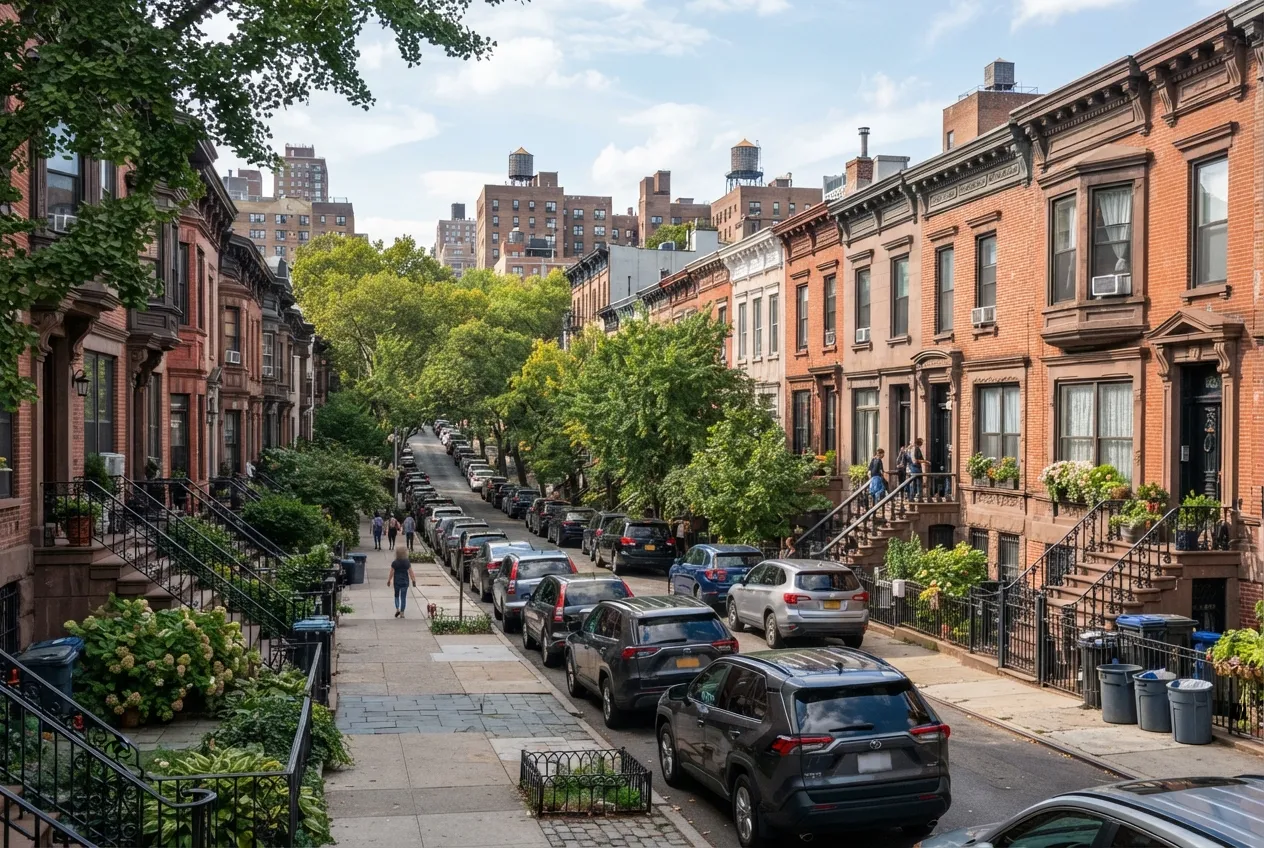
Prospect Heights is about a mile east of our Brooklyn office, so our crew is close by when a chimney needs work. Much of the housing here is brownstones, rowhouses and pre-war apartment buildings. Most of them rely on masonry chimneys that have taken years of freeze-thaw cycles, wind-driven rain and heating exhaust. This page covers chimney repair specifically: what tends to fail on these buildings, how we find the cause before we fix anything, and how to plan the work around the heating season.
What Wears Out on Prospect Heights Chimneys
On attached rowhouses and brownstones, the chimney usually runs up a party wall or rear wall and exits through a flat roof. The masonry above the roofline is fully exposed to weather, and water causes most of the repairs we see. Once moisture gets into brick and mortar, winter freezing pushes the masonry apart a little more each year.
In pre-war apartment buildings, the chimney often serves a central boiler, so it handles far more exhaust than a single fireplace does. Damage inside the flue can go unnoticed for a long time because nobody looks up a boiler chimney until something goes wrong.
- Crumbling or missing mortar joints that need repointing
- Spalling brick, where the face of the brick flakes or pops off
- Cracked or eroded chimney crowns that let water into the core of the stack
- Failed flashing where the chimney meets the roof, a common cause of stains on top-floor ceilings and walls
- Cracked, shifted or missing clay flue tiles
- Missing or rusted chimney caps that let in rain, debris and animals
We Find the Cause Before We Recommend a Fix
A water stain on a top-floor ceiling can come from the crown, the flashing, the brick itself or a missing cap. If the wrong spot gets patched, you pay for the work and the leak comes back. Our certified technicians start with an inspection so the repair matches the actual problem.
The NFPA 211 standard calls for chimneys, fireplaces and vents to be inspected once a year. Chimney professionals use three inspection levels. Level 1 is for systems where nothing has changed. Level 2 applies when the system changes, such as a new appliance or a switch of fuel, or when the home is sold. Level 3 is for cases where a hidden hazard can only be reached by opening part of the chimney or building. Most repair visits start at Level 1 or Level 2. We also look inside the flue with a camera to find damage that can't be seen from the roof or the firebox.
Oil-to-Gas Conversions and Flue Liners
Many older Brooklyn buildings have moved from oil heat to gas, and others are planning to. When a New York City building converts its boiler from oil to gas, the chimney has to be evaluated as part of the work. A new liner is often needed, because gas exhaust produces acidic condensate that can corrode a masonry flue.
If your building is planning a conversion, bring us in early. That way the chimney evaluation and any liner work fit the boiler installer's schedule instead of holding it up. We also reline chimneys when old clay tiles have cracked, whether or not the fuel is changing.
Planning Repairs Around Heat Season
New York City's heat season runs from October 1 through May 31. During that time, building owners must keep apartments heated to the city's minimum temperatures. If you own a building with tenants, taking the boiler chimney out of service in January is a serious problem.
Late spring and summer are the easiest times to schedule masonry rebuilding, crown work and relining, and mortar and crown materials cure better in mild weather. If you notice a problem in winter, get an inspection anyway. We can tell you whether the chimney is safe to keep using and which repairs can wait until warmer months.
Serving Prospect Heights and Nearby Neighborhoods
Our crew also handles chimney repair in Park Slope, Downtown Brooklyn, DUMBO, Boerum Hill and Windsor Terrace. Many buildings across these neighborhoods are older masonry structures, so the same problems come up throughout the area: water damage, worn mortar and aging liners.
More services in Prospect Heights
- Chimney Sweep in Prospect Heights
- Chimney Inspection in Prospect Heights
- Air Duct Cleaning in Prospect Heights
- Chimney Liner Installation in Prospect Heights