
The short answer
A chimney sweep removes soot, creosote and blockages from your flue, and we pair it with a visual inspection, since the NFPA 211 standard calls for chimneys to be inspected once a year. For Downtown Brooklyn brownstones, rowhouses and pre-war buildings, the best time is late summer or early fall, before the city's heat season starts on October 1.
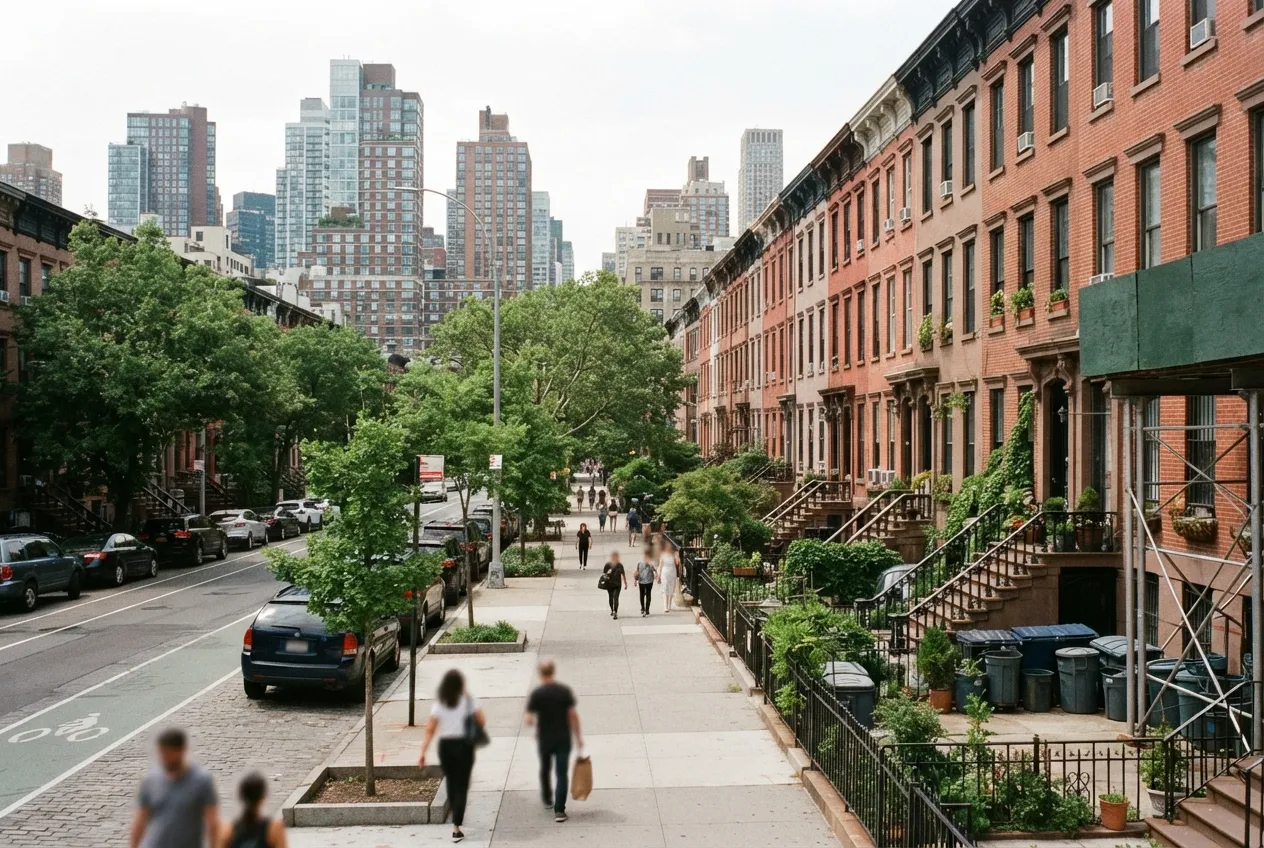
Downtown Brooklyn mixes newer residential towers with pre-war apartment buildings, brownstones and rowhouses, especially toward its edges. Many of these older homes still have working masonry chimneys that serve fireplaces, boilers or both. ProSweep Chimney Service sends certified technicians from our Brooklyn office, about 2 miles south, to sweep and inspect chimneys in ZIP code 11201 and the surrounding neighborhoods. This page explains what a sweep involves for the kinds of buildings found here, when to schedule one, and what we look for at the hearth and on the roof.
What a Chimney Sweep Includes
A sweep removes the soot and creosote that build up inside a flue each time you burn wood or run a fuel-burning appliance. Creosote is flammable, and a thick layer narrows the flue and can catch fire. Soot and debris also weaken the draft, which can push smoke or combustion gases back into the room.
We pair every sweep with a visual inspection, because a clean flue is easier to check. The NFPA 211 standard calls for chimneys, fireplaces and vents to be inspected once a year, and a sweep is a natural time to do it.
- Brushing the flue from the top, the bottom or both, depending on roof access
- Cleaning the smoke chamber, smoke shelf and firebox
- Checking that the damper opens smoothly and closes with a good seal
- Looking at the crown, cap and visible masonry for cracks, gaps or missing mortar
- Removing nests, leaves and other blockages
- Containing dust with drop cloths and a HEPA vacuum
Chimneys in Downtown Brooklyn Homes
Many of the area's brownstones and rowhouses were built with masonry chimney stacks that hold several flues side by side, often one for each floor's fireplace and one for the heating system. Over the years, some fireplaces were sealed, made decorative or reopened by later owners. Before we sweep, we confirm which flue serves which fireplace or appliance so nothing gets missed or mixed up.
In pre-war apartment buildings and converted multi-unit houses, the chimney often serves a central boiler, and roof access may run through a bulkhead or shared hatch. We coordinate with owners, supers or building managers ahead of time so the crew can reach the roof and boiler room without disrupting residents.
Older brick flues can have cracked clay tile liners, eroded mortar joints or no liner at all. When we find these, we show you photos and explain your options before any repair is discussed.
Scheduling Around Heat Season
New York City's heat season runs from October 1 through May 31. During those months, building owners must keep apartments heated to the city's minimum temperatures, so a boiler flue problem discovered in midwinter can leave you with few good choices. Sweeping and inspecting in late summer or early fall gives you time to handle any findings before the heat has to be on.
The same timing works for wood-burning fireplaces: clean the flue before the first fire of the season. If you burn often through the winter, a midseason check can make sense too. We'll describe the buildup we see so you can judge how quickly it's forming.
Oil-to-Gas Conversions and Liners
Some Downtown Brooklyn buildings have switched, or plan to switch, their boilers from oil to gas. When a New York City building makes that conversion, the chimney has to be evaluated as part of the work. A new liner is often needed, because gas exhaust produces acidic condensate that can corrode a masonry flue.
A change of fuel or appliance also calls for a Level 2 inspection, a more detailed look than the Level 1 inspection used when nothing has changed. On a former oil flue, we sweep out the old soot and scale first so the actual condition of the flue can be seen.
What to Expect on the Day
Our certified technicians arrive with the brushes, rods, camera and cleanup equipment the job needs. A few simple steps help the visit go smoothly.
We also serve nearby DUMBO, Brooklyn Heights, Boerum Hill, Cobble Hill and Carroll Gardens, where similar rowhouses and older buildings are common.
- Skip fires for at least a day beforehand so the firebox is fully cool
- Clear a few feet of space in front of the hearth
- Tell us about roof access, building rules or a super we should contact
- Expect a walkthrough of what we found, with photos of any problem areas
More services in Downtown Brooklyn
- Chimney Inspection in Downtown Brooklyn
- Chimney Repair in Downtown Brooklyn
- Air Duct Cleaning in Downtown Brooklyn
- Chimney Liner Installation in Downtown Brooklyn