
The short answer
Yes, ProSweep Chimney Service serves all of Fort Greene (ZIP 11205), about two miles from our Brooklyn office. Our certified technicians inspect, sweep and repair chimneys in brownstones, rowhouses and pre-war buildings, and also clean dryer vents and air ducts.
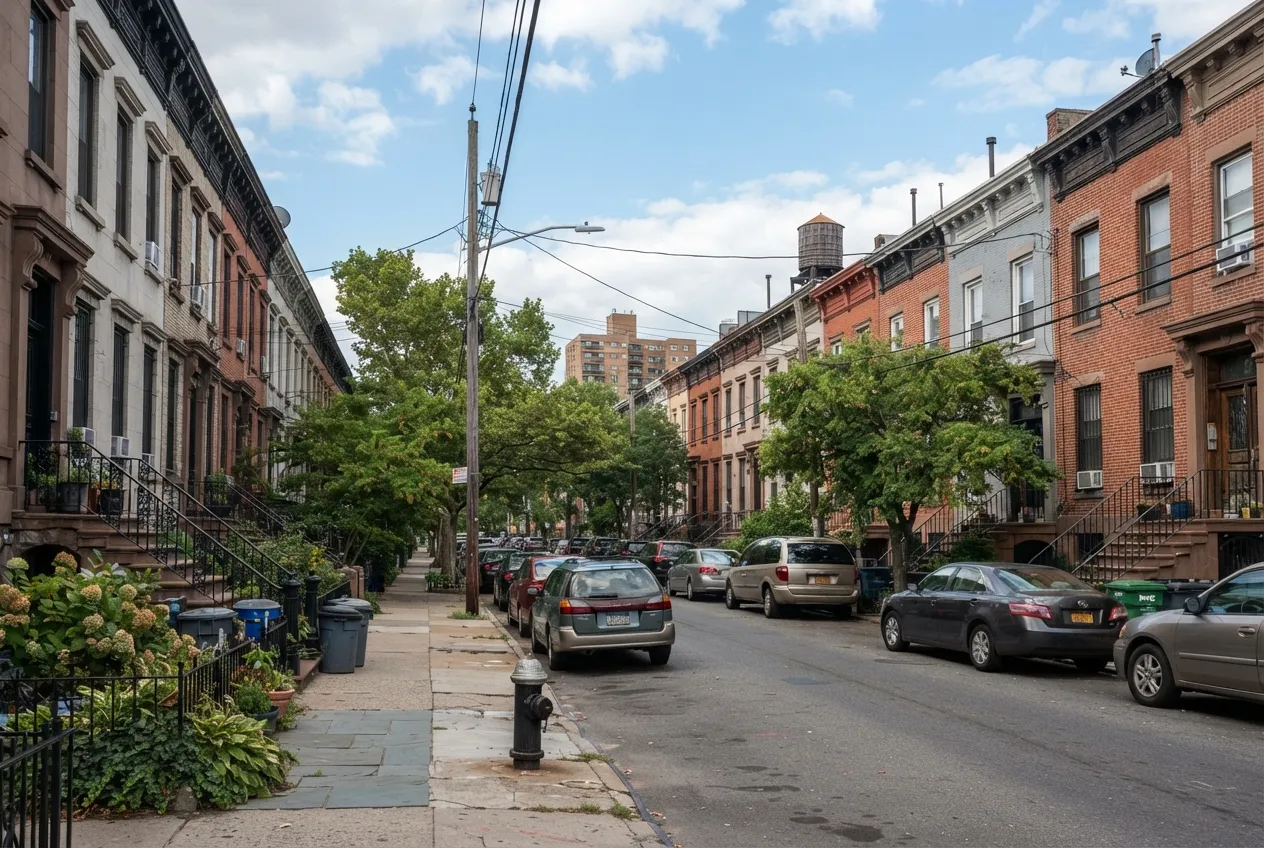
Fort Greene is a Brooklyn neighborhood about two miles northeast of our office, and ProSweep Chimney Service works throughout ZIP code 11205. Many homes here are brownstones and rowhouses, with pre-war apartment buildings mixed in. Most were built long before modern venting standards. That means chimneys with several flues, fireplaces that may not have been used in decades, and boiler flues that have been through fuel changes. Our certified technicians inspect, clean and repair these systems, along with dryer vents and air ducts. You'll know what condition your home is in before you light a fire or turn up the heat.
Chimneys in Fort Greene Brownstones and Rowhouses
Older Brooklyn rowhouses often have one chimney stack serving several fireplaces, often one per floor, plus a flue for the heating system. Over the years some of those fireplaces were closed off, kept only for decoration, or fitted with gas logs. It isn't always clear which flue goes where. A flue can also look fine at the hearth and still be blocked or damaged at the top.
Rowhouses share walls, so a cracked flue or failed mortar joint can let smoke or heat travel where it shouldn't. We use a camera inspection to follow each flue. Then we report what we find in plain terms: what's safe to use, what needs cleaning, and what needs repair before the next fire.
What Brooklyn Winters and Storms Do to Masonry
New York winters bring repeated freezing and thawing. Water that soaks into brick and mortar expands when it freezes. Over a few seasons that loosens joints, flakes off brick faces and cracks chimney crowns. Wind-driven rain from coastal storms pushes water into the top of a chimney, and humid summers keep the masonry damp.
Warning signs include white staining on brick, damp patches on interior walls near the chimney, rust on the damper, and bits of mortar or tile in the firebox. The right fix depends on the cause:
- A chimney cap to keep rain, animals and debris out of the flue
- A chase cover for framed chimneys that house metal flues
- Repointing, crown repair or partial rebuilding for deteriorated masonry
- Breathable waterproofing applied after repairs, so the brick can still release moisture
- Damper repair or replacement when an old cast-iron damper no longer seals
Heating Season, Boiler Flues and Yearly Inspections
New York City's heat season runs from October 1 through May 31. During that time, building owners must keep apartments heated to the city's minimum temperatures. If you own a small apartment building or a multi-family brownstone, a blocked or damaged boiler flue in January is a serious problem. The best time to have it checked is before October.
The NFPA 211 standard calls for chimneys, fireplaces and vents to be inspected once a year. A Level 1 inspection fits when nothing has changed. A Level 2 inspection is the right call when you buy or sell a home, add a new appliance, or switch fuels. A Level 3 inspection is for cases where a suspected hidden hazard means opening part of the chimney or building.
If your building is converting its boiler from oil to gas, the chimney has to be evaluated as part of the work. Gas exhaust produces acidic condensate that can corrode a masonry flue, so a new liner is often needed. We can assess the flue and install a properly sized liner.
Dryer Vents and Air Ducts
According to the U.S. Fire Administration, failure to clean is the leading factor contributing to clothes dryer fires in homes. In rowhouses and apartments, dryer vents often run a long way or through tight spaces to reach an outside wall, which makes lint buildup more likely. If clothes take longer to dry or the laundry area feels hot, the vent is due for cleaning.
For air ducts, we follow the EPA's guidance. Cleaning makes sense when there is substantial visible mold growth, signs of vermin, or excessive dust and debris. Duct cleaning has not been shown to prevent health problems, so we won't claim it will. We explain our process before we start. We use chemical treatments only when there's a clear reason for them and you agree.
Services in Fort Greene and Nearby Neighborhoods
We serve all of Fort Greene (ZIP 11205), as well as nearby Downtown Brooklyn, DUMBO, Boerum Hill, Prospect Heights and Brooklyn Heights. Services include:
- Chimney sweep
- Chimney inspection
- Chimney repair
- Chimney rebuilding
- Chimney liner installation
- Chimney cap and chase cover
- Chimney waterproofing
- Fireplace and damper repair
- Dryer vent cleaning
- Air duct cleaning
ZIP codes we serve
- 11205